Picture this: you've just finished a lovely roast dinner, but instead of diving straight into sticky toffee pudding, you pause. Out comes a carefully curated selection of cheeses, a bottle of red wine, and suddenly your dining room feels less like suburban Britain and more like a Parisian bistro. This, mes amis, is the magic of the proper cheese course — and it's high time we Brits embraced it.
The Great British Cheese Catastrophe
Let's be honest about our relationship with cheese in this country. We've relegated it to sad sandwich fillings, post-Christmas buffet afterthoughts, or those peculiar "cheese and biscuits" moments that somehow happen after we've already had pudding. It's like serving the wine with breakfast — technically possible, but missing the entire point.
In France, cheese isn't an afterthought — it's the crescendo before the final act. Served after the main course but before dessert, the cheese course provides that perfect moment of reflection, conversation, and pure indulgence that transforms a simple meal into a proper dining experience.
Why the French Got It Right
The genius of the French approach lies in timing and reverence. Your palate has moved beyond the savoury main course but isn't yet ready for the sweetness of dessert. This is when cheese shines brightest — when you can truly appreciate its complexity without the distraction of competing flavours.
There's also something beautifully civilised about the ritual itself. The careful selection, the proper knives, the way conversation naturally flows as you debate the merits of a perfectly ripe Camembert versus a sharp Roquefort. It's dining as theatre, but in the most unpretentious way possible.
Building Your British-French Cheese Board
The good news? You don't need to raid specialist fromageries to create a proper cheese course. Many excellent French-style cheeses are readily available in British supermarkets, and our own artisanal cheese makers have been creating Continental-inspired beauties that would make any Parisian proud.
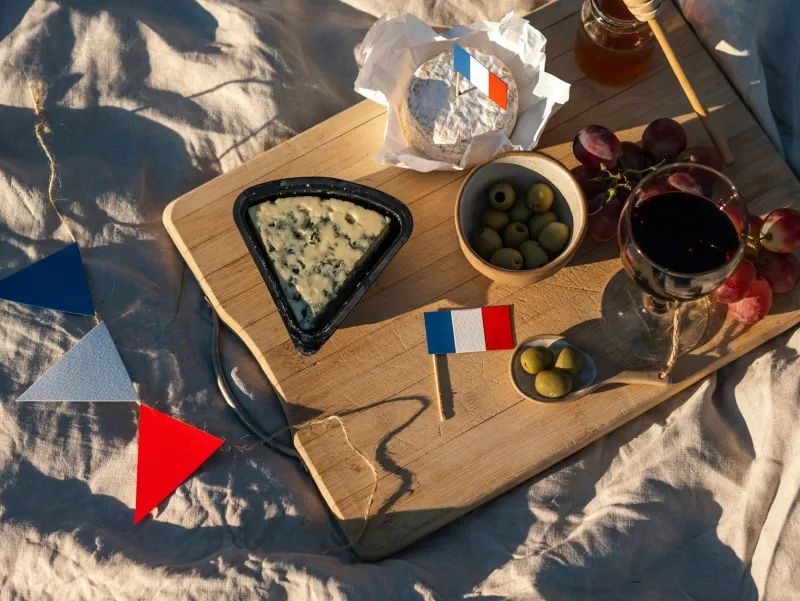
Start with the holy trinity: a soft cheese (Brie or Camembert), a hard cheese (aged Cheddar or Comté), and something with a bit of blue (Roquefort or Stilton). This gives you range without overwhelming the palate or the wallet.
For the more adventurous, add a goat's cheese — perhaps a creamy chèvre or something with herbs. The key is variety in texture and intensity, creating a journey across your cheese board that keeps the conversation flowing.
The Supporting Cast
A proper cheese course needs more than just cheese. Think of crusty bread or plain water biscuits as your canvas — nothing too fancy that might upstage the main event. Fresh fruit works beautifully; grapes and pears are classics, but don't overlook the humble apple, especially with stronger cheeses.
A small pot of honey or fig jam adds sweetness without overwhelming, while a handful of walnuts provides textural contrast. Keep it simple — the cheese should remain the star.
Wine: The Perfect Partnership
This is where the French tradition truly sings. A glass of good red wine with cheese isn't just pleasant — it's transformative. The tannins in the wine cleanse the palate between different cheeses, while the richness of the cheese softens any harsh edges in the wine.
Don't overthink the pairings. A decent Côtes du Rhône works with almost everything, while a crisp white like Sancerre pairs beautifully with goat's cheese. If you're feeling flush, a Port with blue cheese is one of life's great pleasures.
Making It Work in British Life
The beauty of the cheese course is its flexibility. It works as well for a Tuesday night dinner with the family as it does for Saturday entertaining. Start small — perhaps just one or two cheeses after your main course, with a glass of whatever wine you're already drinking.
For dinner parties, it's a game-changer. While your guests digest the main course, the cheese board keeps the evening flowing without the pressure of timing a complicated dessert. It's sophisticated without being showy, Continental without being pretentious.
The Civilising Effect
Perhaps most importantly, the cheese course forces us to slow down. In our rush-everything culture, it creates a natural pause that encourages lingering, conversation, and connection. It's the antithesis of grab-and-go dining — a small act of rebellion against our increasingly hurried lives.
The French understand that meals aren't just about sustenance — they're about ritual, pleasure, and human connection. The cheese course embodies all of these values in one elegant, accessible tradition.
Time to Take the Plunge
So next time you're planning a meal — whether it's a casual family dinner or a proper dinner party — consider adding that pause between main and pudding. Select a few cheeses, open a bottle of wine, and let the evening unfold naturally.
Your guests (and your family) might initially wonder what you're up to, but they'll quickly understand. Because once you've experienced the civilised pleasure of a proper cheese course, going back to the old ways feels rather like eating your pudding with a spoon when there's a perfectly good dessert fork right there.
After all, some traditions are worth adopting wholesale — especially when they involve cheese, wine, and the gentle art of taking one's time.