The Great British Soup Misunderstanding
We've got it all wrong, haven't we? In Britain, soup skulks apologetically in the shadows — a quick lunch from a tin, a starter before the 'real' food arrives, or something to warm you up when you're feeling poorly. Meanwhile, across the Channel, the French have elevated soup to an art form worthy of reverence.
Walk into any French bistro and you'll find soup commanding centre stage on the menu. Not tucked away with the starters, but proudly displayed as a main course option alongside the steak frites and coq au vin. This isn't accident — it's cultural wisdom that Britain desperately needs to embrace.
The Liquid Landscape of France
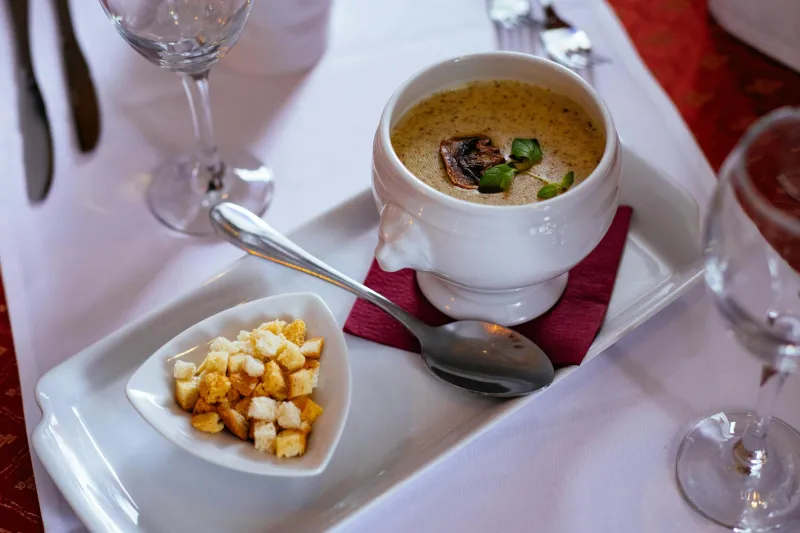
French soup culture spans the entire country like a delicious map. In Provence, fishermen's wives perfected bouillabaisse, that saffron-scented celebration of the Mediterranean's bounty. Travel north to Normandy and you'll encounter velouté de champignons so silky it could double as velvet. Head to Lyon — France's gastronomic capital — and discover gratinée lyonnaise, their version of French onion soup that puts our pub versions to shame.
Each region guards its soup secrets jealously, passing recipes through generations like family heirlooms. This isn't fast food culture — it's slow wisdom, the kind that transforms seasonal vegetables and leftover bones into liquid gold.
The Alchemy of Proper Stock
The foundation of every great French soup lies in its stock, and here's where Britain often stumbles. We've become a nation of stock cube users, reaching for those salty squares when what we really need is time and bones.
French cooks understand that proper stock requires patience. They simmer chicken carcasses with aromatic vegetables for hours, creating a base so flavourful it could stand alone as soup. Beef bones get roasted until deeply caramelised, then slowly cooked with wine and herbs until the liquid becomes liquid umami.
This isn't pretentious cooking — it's practical magic. One afternoon of stock-making provides the foundation for weeks of extraordinary soups. And the best part? British supermarkets now stock everything you need, from organic chicken bones to proper French herbs.
Mastering the French Onion
Let's start with the most misunderstood French soup in British kitchens: soupe à l'oignon gratinée. We've bastardised this classic into something resembling cheese on toast floating in brown water, when the authentic version represents pure alchemy.
Proper French onion soup begins with patience. Kilograms of onions — yes, kilograms — get sliced thin and cooked slowly until they surrender their sweetness and turn deep amber. This process takes at least an hour, often two. There are no shortcuts, no ways to hurry the caramelisation that creates the soup's complex, almost meaty flavour.
The stock matters enormously here. Weak stock produces weak soup, no matter how perfectly you've cooked those onions. Use proper beef stock — homemade if possible, but even good shop-bought versions work better than cubes.
The final assembly requires attention too. The bread shouldn't be soggy white slices but proper crusty bread, toasted until golden. The cheese needs enough character to stand up to the rich broth — Gruyère remains the classic choice, though a good British aged cheddar can work beautifully.
The Velvet Revolution
French velouté represents soup-making at its most elegant. These silky, cream-based soups transform humble vegetables into liquid luxury, and they're far more achievable in British kitchens than most people imagine.
Take velouté de poireaux, the classic leek soup. Start with good butter — proper French butter if you can find it, though British butter works fine. Sweat sliced leeks until they're soft and sweet, add stock, simmer until tender, then blend until completely smooth. The final touch — a splash of cream and perhaps a knob of butter whisked in at the end — creates that characteristic silky texture.
The key lies in the blending. French chefs often pass their velouté through fine sieves after blending, ensuring absolute smoothness. It's a small extra step that transforms good soup into restaurant-quality brilliance.
Seasonal Soup Sense
France's soup culture follows the seasons religiously, and this wisdom translates perfectly to British ingredients. Spring brings soupe aux petits pois, celebrating the first tender peas. Summer calls for gazpacho-style cold soups, though the French versions tend to be more refined than their Spanish cousins.
Autumn unleashes the full power of French soup-making: pumpkin soups enriched with chestnuts, mushroom soups that taste like forest floors, and hearty bean soups that could sustain you through winter.
Winter soups become substantial affairs — pot-au-feu that's half soup, half stew, or the legendary garbure from southwest France, packed with cabbage, beans, and preserved duck.
Shopping Like a French Cook
Adopting French soup culture means shopping differently. Instead of buying pre-packaged soup vegetables, learn to select ingredients with intention. Visit your butcher for proper bones — many will give them away or charge very little. Seek out seasonal vegetables at their peak rather than settling for year-round mediocrity.
British farmers' markets increasingly stock the herbs and vegetables that make French soups sing. Proper shallots, fresh thyme, good leeks — these ingredients exist in Britain now, often grown by farmers who understand their importance.
The Main Event
Perhaps the most revolutionary aspect of French soup culture is treating soup as a proper meal, not a preliminary course. Serve your French onion soup with good bread and perhaps a simple salad, and you've created a satisfying dinner that honours both French tradition and British practicality.
This approach makes particular sense in modern Britain, where we're increasingly conscious of food waste, cooking costs, and eating seasonally. A pot of proper soup stretches ingredients further than almost any other cooking method while creating something genuinely satisfying.
French soup culture offers Britain a path back to cooking with intention, eating with pleasure, and understanding that the simplest ingredients, treated with respect and patience, can create the most extraordinary results. It's time we gave soup the starring role it deserves.