The Insider's Guide to French Bistro Menus: What Every British Diner Should Know
The Insider's Guide to French Bistro Menus: What Every British Diner Should Know
There's a particular moment of panic that strikes many British diners when faced with an authentic French bistro menu. The handwritten scrawl, the lack of English translations, the waiter hovering expectantly — it's enough to send even the most confident foodie reaching for their phone's translation app. But armed with a few insider secrets, you'll be ordering like a Parisian regular in no time.
The Golden Rule: Trust the Plat du Jour
Here's the first thing every French regular knows: the plat du jour (dish of the day) is almost always your best bet. It's not a clever marketing ploy or a way to shift ingredients that are about to go off — it's the chef's way of showcasing what's at its absolute peak.
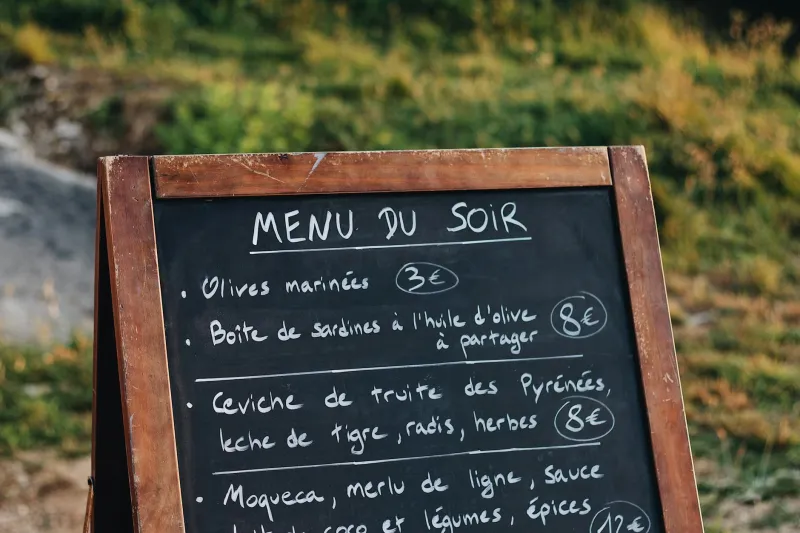
French bistro cooking is built around seasonality and market availability in a way that would make British farm-to-table restaurants weep with envy. When the chef writes 'lapin aux pruneaux' on the board, it's because the rabbit is exceptional and the pruneaux (prunes) are at their best. When it's 'sole meunière,' the fish counter had something special that morning.
The plat du jour also represents the kitchen at its most confident. It's the dish they've been perfecting all week, the one they're genuinely excited about. Ignore it at your peril — and definitely don't assume it's somehow lesser than the printed menu options.
Decoding the French Menu Hierarchy
French bistro menus follow a logical structure that, once you understand it, makes ordering infinitely easier. The entrées aren't main courses (that's a particularly confusing bit of Franco-British translation) — they're starters. The plats are your main courses, and desserts are, thankfully, exactly what they sound like.
But here's where it gets interesting: the positioning on the menu tells you a story. Items at the top of each section are often the chef's signatures or the most popular dishes. The middle section typically features seasonal specials, while the bottom might house the more challenging or unusual offerings that regulars seek out.
Prices can be equally revealing. In a good bistro, the most expensive dish isn't necessarily the best — it might just feature pricier ingredients. Often, the mid-range options represent the best value and the chef's true skill.
The Wine Carafe Wisdom
British diners often overlook one of the bistro's greatest pleasures: wine by the carafe. That innocuous-looking 'vin rouge/blanc/rosé' at the bottom of the wine list isn't cheap plonk — it's the house wine, chosen specifically to complement the food.
French bistros take their house wine seriously. It's selected to pair with the style of cooking, priced to encourage daily drinking, and usually represents exceptional value. A pichet (small carafe) is perfect for lunch, while a carafe entière (full carafe) is ideal for sharing.
Don't be afraid to ask about the house wine's origin. Many bistros source directly from small producers, and the staff are usually happy to share the story. You might discover a hidden gem that costs a fraction of the bottled alternatives.
The Water Wars: Navigating French Hydration
Here's where British and French dining cultures clash most obviously: water service. In Britain, tap water appears automatically and free of charge. In France, you need to know the code.
Ask for 'une carafe d'eau' or 'l'eau du robinet' and you'll get free tap water, though some waiters might initially suggest bottled water instead. Don't take this personally — it's not a judgment on your budget, just French habit. Stick to your guns if you want tap water; it's perfectly acceptable and the water quality in French cities is excellent.
The key is asking confidently. A hesitant 'Water please?' in English marks you as a tourist. A clear 'Une carafe d'eau, s'il vous plaît' gets you what you want without fuss.
What the Regulars Never Order
Every bistro has its tourist traps — dishes that sound appealing but represent the kitchen's laziest efforts. Anything described as 'international' cuisine is usually a red flag. If you're in a French bistro, eat French food.
Beware of overly elaborate descriptions or dishes that seem out of place with the restaurant's style. A simple neighbourhood bistro offering 'pan-seared duck breast with exotic fruit reduction' is probably reaching beyond its comfort zone.
Similarly, avoid anything that seems too cheap compared to similar dishes. That bargain steak might be a piece of beef that's seen better days, while the slightly pricier option could be a beautiful piece of bavette that the chef sources from his trusted butcher.
The Art of Reading Between the Lines
French menus often tell you more than they appear to. 'Fait maison' (homemade) isn't just a nice touch — it's a signal that this kitchen takes pride in doing things properly. When you see 'selon arrivage' (depending on availability), you're looking at a restaurant that prioritises quality over consistency.
Seasonal modifiers are equally telling. 'Primeurs' indicates the first of the season's vegetables, 'de saison' confirms seasonality, and specific regional appellations (like 'agneau de Sisteron' or 'poulet de Bresse') suggest serious sourcing.
Timing Is Everything
Understand French meal timing and you'll have a much better experience. Lunch service typically runs from noon to 2pm, dinner from 7:30pm onwards. Arrive outside these windows and you might find a limited menu or, worse, a kitchen that's clearly winding down.
The best time to experience a bistro at its peak is actually towards the end of lunch service — around 1:30pm. The kitchen is in full swing, the staff have hit their stride, and you're more likely to get the chef's full attention.
The Cheese Course Conundrum
British diners often struggle with the French cheese course, unsure whether to order it as a starter or after the main course. The answer is simple: in France, cheese comes after the main course and before dessert. It's not a British-style cheese board — it's usually a selection of three or four cheeses in perfect condition, served with good bread.
Don't feel obligated to order cheese, but if you do, take it seriously. This is often where a good bistro really shows its expertise. The cheese will be perfectly ripe, properly stored, and served at the ideal temperature.
Embracing the Experience
Perhaps the most important thing to understand about French bistro dining is that it's not just about the food — it's about taking time, enjoying conversation, and treating the meal as a proper break from the day. The French don't rush through lunch, and neither should you.
Relax, engage with the staff, and don't be afraid to ask questions. Most bistro staff are genuinely proud of their food and happy to explain dishes or make recommendations. A little curiosity and enthusiasm will get you much further than perfect pronunciation.
The goal isn't to pass as French — it's to appreciate the culture and craft that goes into this most democratic of French institutions. Armed with these insights, you'll find that bistro dining becomes less about decoding mysteries and more about enjoying one of France's greatest gifts to the culinary world.