The Sacred Art of Café Lingering
There's a beautiful moment in every French café when time seems to slow down. It happens around 11am, when the morning rush has settled and the lunch crowd hasn't yet arrived. This is when you'll spot them: the locals who've been nursing a single espresso for the past hour, reading their newspaper or simply watching the world go by.
As a Brit, this feels almost criminal. We're programmed to order, consume, and vacate—preferably within fifteen minutes. But French café culture operates on an entirely different principle: once you've bought your drink, you've essentially rented your table for as long as you please.
The Unspoken Table Rules
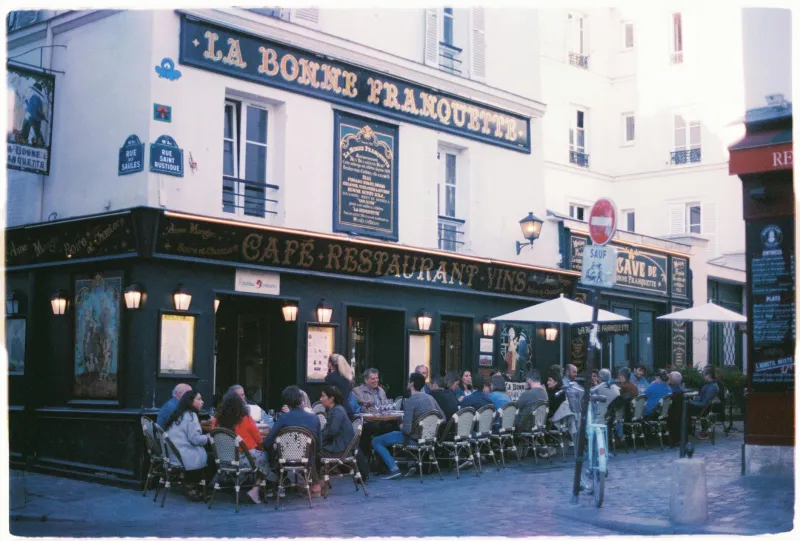
Understanding French café seating is like learning a secret language. The prime real estate—those coveted pavement tables—operates on a first-come, first-served basis, but there's an art to claiming your spot. Arriving with purpose is key; hesitation marks you as a tourist faster than a Union Jack rucksack.
Once seated, your table becomes your temporary kingdom. Unlike British pubs where strangers might ask to share your table, French café culture respects personal space. That small round table for two? It's yours alone, even if you're solo and every other table is occupied.
The Great Coffee Timing Conspiracy
Here's where British visitors often stumble: coffee in France is governed by an invisible timetable. Order a café au lait after 11am and you'll receive the kind of look typically reserved for tourists who ask for chips with their coq au vin. Morning is for milky coffee; afternoon is for espresso, pure and simple.
The cappuccino conundrum is real. While every café serves them, ordering one after lunch immediately identifies you as foreign. It's not that they won't serve it—French hospitality is too refined for outright refusal—but you'll sense the gentle disapproval.
The Service Dance
French café service operates on mutual respect rather than British-style eager attentiveness. Your waiter isn't ignoring you; they're giving you space. Eye contact is your friend here—a gentle nod or raised finger will summon service when you need it.
But here's the crucial bit: never, ever ask for the bill unless you're genuinely ready to leave. In French café culture, requesting l'addition signals the end of your visit. There's no British-style bill-requesting-but-still-finishing-drinks nonsense. Ask for the bill, and you're expected to settle up and move on.
The Pastry Protocol
Breakfast pastries follow their own rules. That pain au chocolat isn't just a snack—it's a morning ritual. Order one at 3pm and you'll confuse everyone, including yourself. Afternoon calls for different treats: perhaps a slice of tarte tatin or a delicate madeleine.
The croissant ceremony is particularly sacred. Real French croissants are buttery, flaky affairs that require careful handling. Pulling them apart with your fingers isn't rustic charm—it's the proper technique. Attempting to cut one with a knife marks you as hopelessly British.
Reading the Room
Every French café has its own personality, and learning to read these subtle cues is part of the experience. The zinc-topped counter cafés near train stations are for quick espressos and hurried conversations. The literary cafés of Saint-Germain invite longer stays and deeper contemplation.
Businesspeople conduct meetings over coffee, students spread textbooks across tables, and elderly gentlemen read their papers with methodical precision. Each has their place in the café ecosystem, and understanding this hierarchy helps you find yours.
The Money Matters
Payment in French cafés is refreshingly straightforward, but timing matters. Service compris means the tip is included, but leaving small change—perhaps rounding up to the nearest euro—is appreciated, not expected.
Card payments are universally accepted, but there's something charmingly old-school about settling your bill with cash. It feels more in keeping with the unhurried pace of café culture.
Conversation Conventions
French cafés are democratic spaces where conversations flow freely, but volume matters. The animated discussions you'll overhear aren't arguments—they're simply how French people engage with ideas. As a visitor, you're welcome to join this conversational culture, but remember that French café talk tends toward the philosophical rather than the practical.
Mobile phone etiquette is particularly important. While brief calls are acceptable, lengthy conversations should be taken outside. The café is for face-to-face interaction, not digital distractions.
Seasonal Sensibilities
French café culture adapts beautifully to the seasons. Summer brings the joy of extended terrace sitting, where people-watching becomes an art form. Winter drives everyone inside, creating an intimate atmosphere of shared warmth and whispered conversations.
Each season brings its own café rituals. Spring calls for the first outdoor coffee of the year—a moment celebrated with quiet reverence. Autumn brings hot chocolate and the return of indoor contemplation.
The Tourist Trap Escape
Spotting authentic café culture isn't difficult once you know what to look for. Avoid anywhere with laminated menus in multiple languages or aggressive touts trying to lure you inside. The best cafés are confident in their offerings and their clientele.
Look for places where locals outnumber tourists, where the zinc bar is worn smooth by generations of elbows, and where the waiters move with practiced efficiency rather than forced enthusiasm.
Bringing It Home
The beauty of French café culture isn't just in the coffee or the pastries—it's in the approach to time and social interaction. Even in Britain's increasingly French-inspired coffee shops, you can adopt this mindset: order with confidence, settle in properly, and resist the urge to rush.
Your local independent coffee shop might not be a Parisian café, but the principles remain the same. Good coffee, unhurried conversation, and the simple pleasure of watching the world go by—these aren't exclusively French pleasures. They're human ones, and they're available wherever people gather over coffee and take the time to truly enjoy it.