The Lost Art of the Sunday Table
Sunday in Britain has become a day of good intentions and mild disappointment. We plan to do something meaningful with our time, maybe cook a proper roast, definitely spend less time on our phones. By evening, we're usually ordering takeaway and wondering where the day went.
Meanwhile, in kitchens across France, Sunday unfolds with the rhythm of a well-rehearsed dance. The pot-au-feu goes on early, filling the house with the smell of slow-cooking beef and vegetables. The table is set with care—not fancy, just proper. Family gathers, friends are invited, and the afternoon stretches ahead like a lazy cat in sunshine.
Why Sunday Matters More Than Saturday
Saturday is for errands and catching up, for drinks with friends and staying out late. Sunday is for something deeper: the pause before the week begins again, the chance to remember that life is more than the sum of its deadlines.
The French understand this instinctively. Sunday lunch isn't just a meal; it's a weekly ceremony of connection, a deliberate act of resistance against the tyranny of the urgent. It's the day when time moves differently, when conversation matters more than efficiency, when the simple act of sharing food becomes almost sacred.
The Magic of Slow Food, Fast Friends
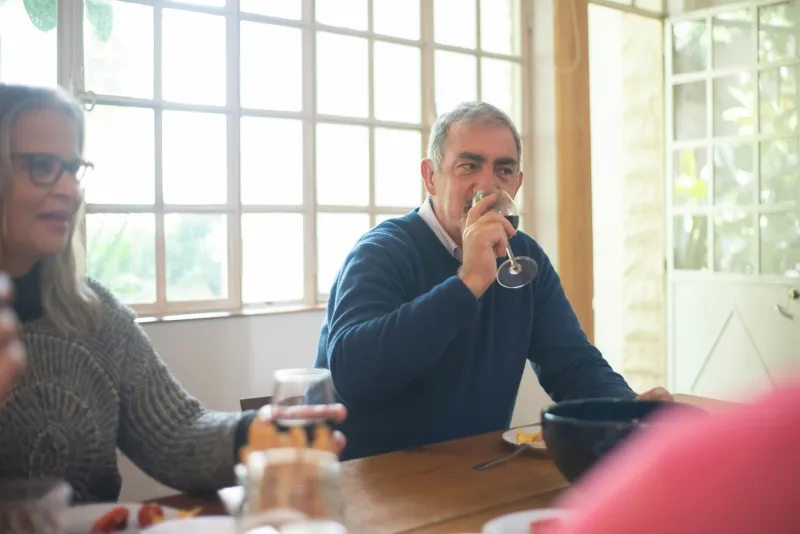
A proper French Sunday lunch begins around one o'clock and can easily stretch until five. This isn't because the French are inefficient—quite the opposite. They've perfected the art of making time for what matters: the second bottle of wine that loosens tongues, the cheese course that extends conversation, the coffee that no one wants to rush.
The menu itself is often wonderfully simple. A pot-au-feu requires little more than good ingredients and patience. A gigot d'agneau needs only time in the oven and the confidence to let it rest properly. These aren't dishes that demand constant attention; they're dishes that reward faith and allow the cook to actually join the party.
Reclaiming Sunday from the Sofa
Britain's relationship with Sunday has become oddly passive. We've turned the weekend's final day into a kind of limbo—too tired from Saturday to be properly active, too anxious about Monday to fully relax. We graze rather than dine, scroll rather than converse, and somehow manage to feel both lazy and restless.
The French approach offers a different path: make Sunday intentional. Set the table properly, even if it's just for two. Cook something that takes time, not because you have to but because you want to. Invite people over, not for a dinner party with all its pressures, but for the simple pleasure of sharing food and time.
The Democracy of the Déjeuner
One of the most beautiful aspects of French Sunday lunch is its accessibility. You don't need expensive ingredients or elaborate techniques. A simple roast chicken becomes special when it's carved at the table and eaten without hurry. A pot of cassoulet, made yesterday and reheated today, tastes better for the extra day's melding of flavours.
The magic isn't in the cooking; it's in the approach. French families might argue about politics, debate the merits of different cheeses, or simply catch up on the week's events. But they do it around a table, with good food as the excuse for good company.
Building Your Own Sunday Ritual
Starting a Sunday lunch tradition doesn't require a complete lifestyle overhaul. Begin small: invite one couple over, cook something simple that can largely look after itself. A slow-roasted shoulder of lamb with garlic and rosemary. A pot of coq au vin that improves while you ignore it. Dishes that reward patience rather than skill.
The key is committing to the time. Not the cooking time—most traditional French Sunday dishes are remarkably hands-off—but the eating time. Plan for the meal to last hours, not because you're being indulgent but because you're being intentional about how you spend your weekend.
The Three-Course Philosophy
French Sunday lunch follows a rhythm that builds satisfaction gradually. The starter—perhaps just good charcuterie and cornichons—whets the appetite and settles everyone at the table. The main course, substantial and warming, anchors the meal and provides plenty to talk about. The cheese course offers a pause, a chance for seconds of wine and deeper conversation.
Dessert, when it comes, is often simple: fruit, perhaps, or a tarte that was made yesterday. By this point, the meal has achieved its true purpose—not just feeding the body but nourishing the spirit.
Making Room for Mess and Magic
The beauty of the French Sunday lunch lies partly in its imperfection. Children drift in and out, adults linger over coffee, someone always stays too late and has to rush home. It's messy and human and completely unlike the Instagram-perfect gatherings we sometimes feel pressured to host.
This is cooking and entertaining stripped of pretension—food as the foundation for connection rather than performance. The goal isn't to impress but to include, not to create memories for social media but to create actual memories.
The Monday Morning Test
You know you've succeeded with Sunday lunch when Monday morning feels different. Not because you're dreading the week ahead—that's unavoidable—but because you feel properly rested, properly fed, properly connected to the people who matter.
The French have a phrase: 'métro, boulot, dodo'—metro, work, sleep. It's their version of the rat race, the grinding routine that can consume a life. But Sunday lunch is the weekly antidote, the reminder that we're more than our productivity, that the best moments often happen when we're not trying to achieve anything at all.
In the end, adopting the French approach to Sunday isn't about becoming more sophisticated or European. It's about remembering that time is the only currency that really matters, and that the best way to spend it is often the simplest: around a table, with people you care about, eating food that tastes like love.