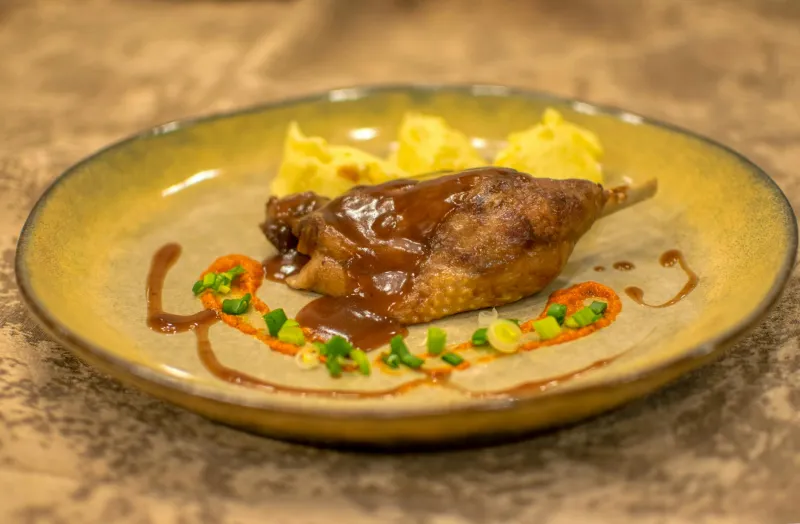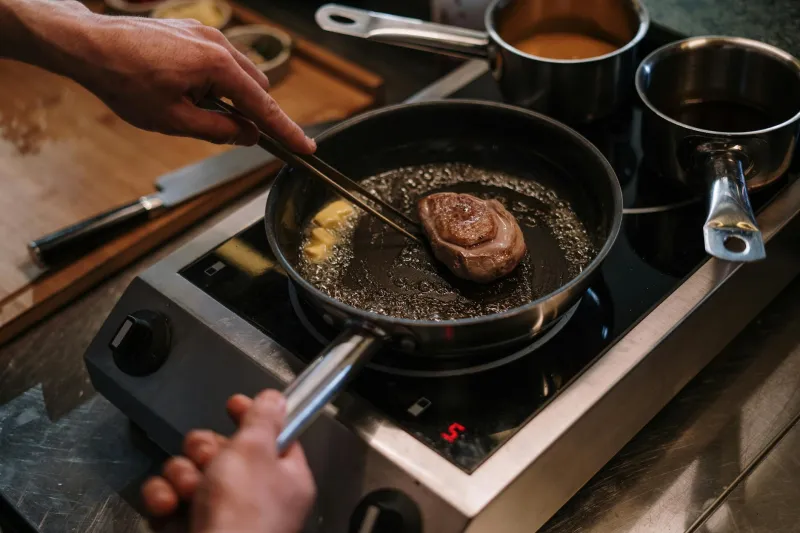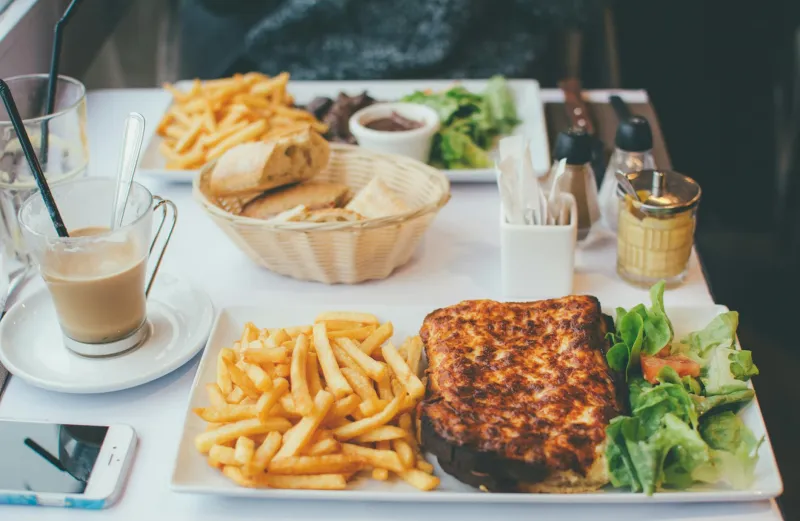
Walk into any Parisian café at lunchtime and you'll witness something remarkable: grown adults ordering what is essentially a posh toastie with the same reverence they'd reserve for coq au vin. The croque monsieur—that golden, bubbling monument to French pragmatism—has achieved something that eludes most British comfort food: it's simultaneously humble and sophisticated, quick yet considered.
The Birth of a Legend
The story begins in 1910 at a café on Boulevard des Capucines, where an enterprising owner decided to jazz up the standard ham and cheese sandwich. What emerged wasn't revolutionary in concept—bread, ham, cheese, a bit of sauce—but revolutionary in execution. The French didn't just slap ingredients together; they created a system, a technique, a philosophy.
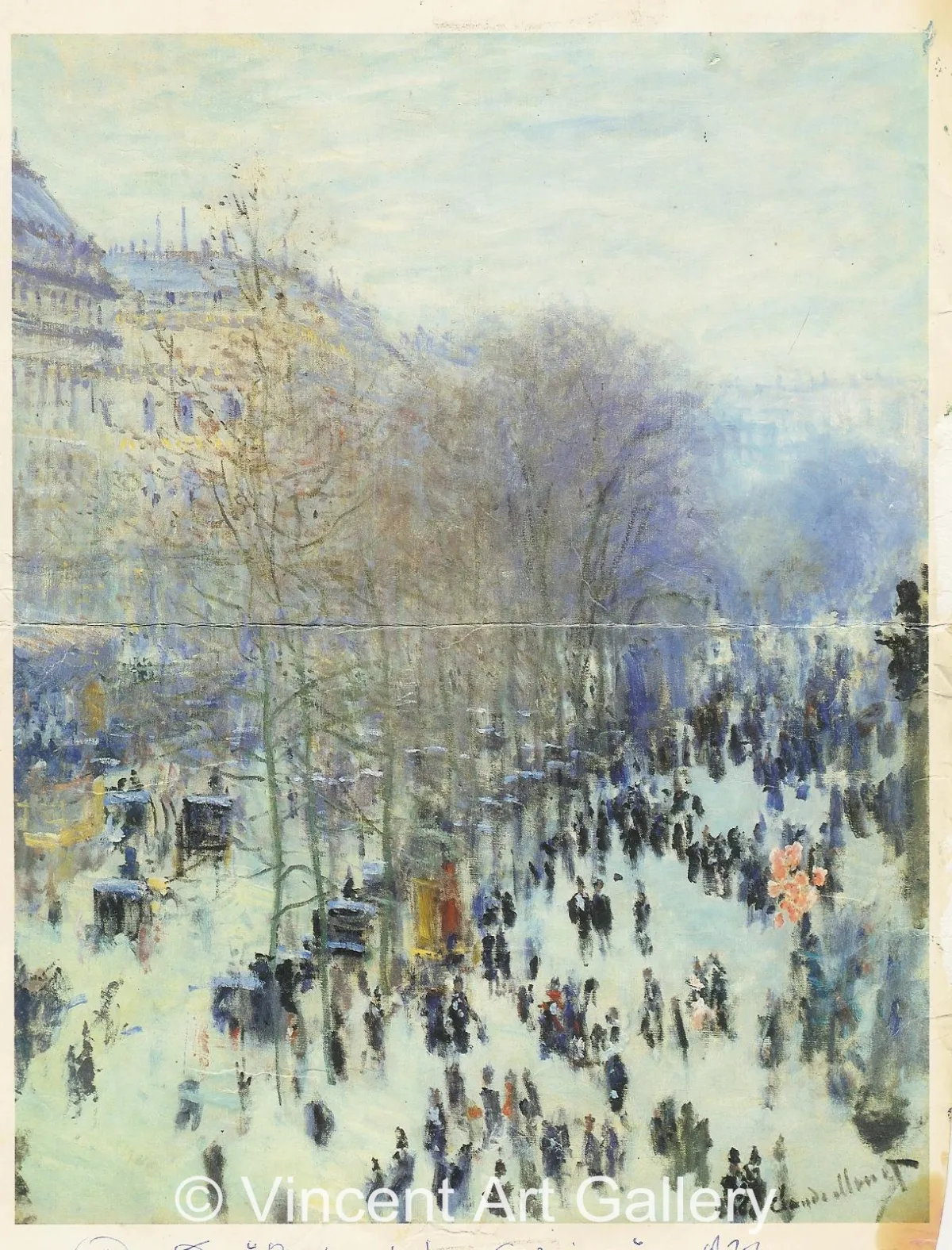 Photo: Boulevard des Capucines, via www.vangoghpaintings.com
This wasn't accident. French café culture has always understood something that British pubs are only just catching onto: people want comfort food that doesn't make them feel guilty about their choices. The croque monsieur delivers satisfaction without shame, sophistication without pretension.
Beyond the Basic: Regional Variations That Matter
While purists might insist on the classic formula—pain de mie, jambon de Paris, Gruyère, and béchamel—France's regions have each added their own twist. In Normandy, they'll slip in a whisper of calvados. Provence adds herbes de Provence to the béchamel. The Alsace version might feature munster cheese and a touch of kirsch.
The croque madame, crowned with a fried egg, represents perhaps the most successful evolution. That golden yolk cascading down the sides transforms lunch into something approaching decadence—yet it's still just ham, cheese, and bread at heart.
What Britain Can Learn
Here's where we Brits often go wrong with our comfort food: we either oversimplify to the point of blandness (think service station sandwiches) or overcomplicate until the original joy disappears entirely. The French croque monsieur strikes that perfect middle ground—elevated enough to feel special, simple enough to execute on a Tuesday.
The secret lies in technique, not exotic ingredients. Every component matters, from the quality of your bread (proper white bread, not Wonder Bread, but not artisanal sourdough either) to the temperature of your grill. The French understand that good technique can make ordinary ingredients sing.
Making It Work in a British Kitchen
The beauty of the croque monsieur is that every ingredient is available in any decent British supermarket. You don't need jambon de Paris—good quality honey roast ham from the deli counter works beautifully. Gruyère is increasingly common, but mature cheddar or even a good Cornish Yarg can substitute admirably.
For the béchamel, don't panic. It's just butter, flour, milk, and seasoning—the same white sauce your nan made for cauliflower cheese, but treated with a bit more respect. The key is cooking out the flour properly and seasoning generously with white pepper and nutmeg.
The Technique That Changes Everything
Start with good bread—something with structure that won't collapse under the weight of sauce and cheese. Day-old bread actually works better than fresh; it holds its shape and doesn't go soggy.
Butter one side of each slice lightly. This creates a barrier against moisture and adds richness. Layer your ham generously but not excessively—you want to taste it, not be overwhelmed by it.
The béchamel should be thick enough to coat the back of a spoon but not so thick it won't spread easily. Too thin and it disappears into the bread; too thick and it dominates everything else.
The Grilling Game
This is where many home cooks stumble. The croque monsieur needs high heat to create that golden, bubbling top while warming the interior through completely. A hot grill (or a very hot oven with the grill function) is essential.
Watch it like a hawk. The difference between perfectly golden and disappointingly burnt is about thirty seconds. You want the cheese to bubble and brown in spots, the edges to crisp slightly, and the whole thing to look irresistibly appetising.
Serving Like a Parisian
In France, a croque monsieur isn't a grab-and-go item. It arrives on a proper plate with a knife and fork, often accompanied by a simple green salad dressed with vinaigrette. This isn't pretension—it's practicality. The thing is molten hot and structurally challenging to eat by hand.
Pair it with something sharp and acidic to cut through the richness. Cornichons are traditional, but a handful of rocket or watercress works beautifully. A glass of crisp white wine wouldn't go amiss either, though a proper cup of coffee is equally appropriate.
The Deeper Truth
The croque monsieur succeeds because it respects both its ingredients and its audience. It doesn't try to be something it's not, but it also doesn't settle for being less than it could be. In a world of increasingly complex food trends, there's something deeply satisfying about a dish that achieves perfection through perfect execution rather than exotic ingredients.
Perhaps that's the real lesson here: sometimes the most profound cooking happens when we stop trying to impress and start trying to perfect. The French have been doing this for over a century with their beloved croque monsieur, and it shows no signs of losing its appeal.
After all, when something is this good, why change it?