The Great British Rush
Walk down any British high street at 8:30am and you'll witness a familiar scene: hordes of commuters clutching paper cups, power-walking towards their destinations whilst simultaneously checking phones, eating breakfast, and somehow managing not to spill their flat whites. We've turned coffee consumption into an Olympic sport of multitasking efficiency.
Meanwhile, across the Channel, something rather different unfolds each morning. In Parisian cafés, people sit. They observe. They breathe. They practise what the French call flâner – the art of wandering without purpose, of existing without agenda. It's a concept that would make most Brits break out in a cold sweat.
What Exactly Is Flânerie?
The word flâneur emerged in 19th-century Paris, describing those elegant souls who strolled the boulevards with no particular destination in mind. Charles Baudelaire romanticised these urban wanderers, calling them "passionate spectators" who found poetry in the everyday rhythm of city life.
But flânerie isn't just about walking – it's about a fundamental approach to time itself. It's the difference between consuming a coffee and experiencing it. Between checking your surroundings for Instagram opportunities and actually seeing them. Between filling every moment with productivity and allowing some moments to simply exist.
In French café culture, this philosophy reaches its purest expression. A single espresso can justify an hour's occupation of a prime terrace table. No waiter will rush you. No fellow patron will judge you. The café becomes a sanctuary for the radical act of being present.
Why Britain Struggles with Stillness
Our relationship with 'doing nothing' is complicated, to put it mildly. We've inherited a Protestant work ethic that equates busyness with virtue and stillness with laziness. Even our language betrays this anxiety – we "grab" coffee, "catch up" with friends, and "squeeze in" lunch breaks.
The guilt runs deep. Sitting in a café without a laptop, a book, or at least a phone to scroll feels almost transgressive. We've forgotten that observation itself is an activity, that people-watching is a legitimate pastime, and that sometimes the most productive thing you can do is absolutely nothing at all.
This cultural conditioning has real consequences. We're more stressed, more disconnected from our surroundings, and ironically, often less creative despite our constant motion. We've optimised the joy out of simple pleasures.
The Café as Classroom
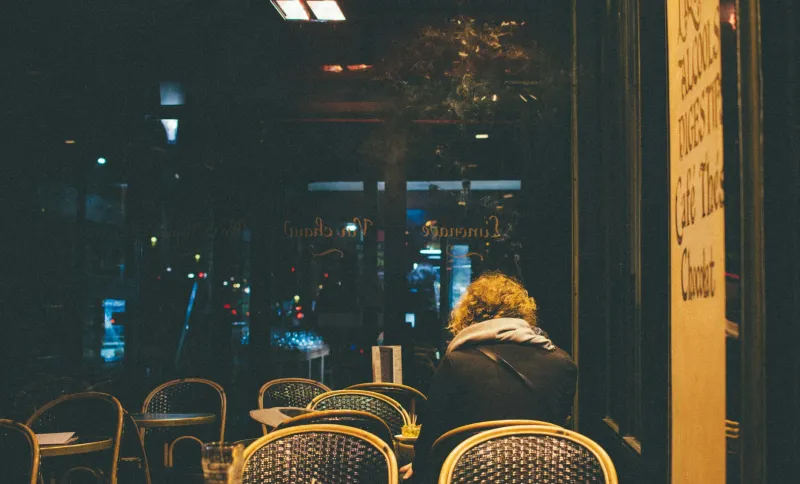
French cafés offer us a masterclass in the art of lingering. Step into any neighbourhood bistro and you'll find locals who've clearly mastered the curriculum. The businessman reading Le Figaro over a second café au lait. The elderly couple sharing comfortable silence whilst watching the world pass by. The student with a single croissant who's claimed a corner table for the entire afternoon.
These aren't lazy people avoiding responsibility – they're practitioners of a sophisticated life skill that we've somehow unlearned. They understand that rushing through experiences diminishes them, that presence is a form of luxury, and that the space between activities is where life's texture lives.
The physical design of French cafés supports this philosophy. Tables face outward toward the street, encouraging observation rather than intense conversation. Service is deliberately unhurried. The very architecture seems to whisper: "Slow down. Stay awhile. Notice things."
Building Your Own Flâneur Practice
So how might we import this wisdom to British shores? Start small. Next time you order coffee, resist the takeaway impulse. Find a seat – preferably by a window – and commit to staying for at least twenty minutes without checking your phone.
Observe your fellow café dwellers. Notice the barista's rhythm. Watch the street theatre unfold outside. Let your mind wander without directing it toward any particular outcome. This isn't meditation – it's something more casual, more integrated into daily life.
Choose cafés that encourage lingering. Look for continental-style establishments with proper tables and chairs rather than high stools designed for quick turnover. Seek out places that serve coffee in proper cups rather than paper vessels that practically shout "takeaway!"
Practise the art of conversation without agenda. Instead of catching up on life admin over coffee, try simply enjoying your companion's company. Let silences exist without rushing to fill them. Allow discussions to meander like a lazy river rather than rushing toward predetermined destinations.
The Revolutionary Act of Presence
In our hyperconnected, always-on culture, choosing to sit still and observe becomes almost revolutionary. It's a quiet rebellion against the tyranny of productivity, a gentle insistence that not every moment needs to be optimised.
The French understand something we're slowly remembering: that life isn't just about reaching destinations, but about noticing the journey. That sometimes the most profound experiences happen when we're not trying to have them. That a well-spent hour in a café can be worth more than a frantically productive morning.
Making Space for Nothing
Perhaps it's time we stopped apologising for wanting to slow down. Maybe we could learn to see café lingering not as self-indulgence but as essential maintenance – like sleep or exercise, but for the soul.
The next time you find yourself in a proper café – the kind with newspapers on wooden sticks and waiters who've mastered the art of benign neglect – resist the urge to fill the time. Instead, try the radical French approach: order something delicious, find a comfortable spot, and practise the lost art of simply being exactly where you are.
After all, in a world obsessed with going somewhere, sometimes the most subversive thing you can do is stay put.