Every weekend across Britain, gardens fill with the smoke of ambitious barbecues. Thick ribeyes get slathered in complex rubs containing seventeen different spices. Porterhouse steaks the size of dinner plates emerge from grills, charred beyond recognition and seasoned to within an inch of their lives. Meanwhile, in France, a bistro chef takes a modest piece of bavette, seasons it with salt and pepper, cooks it simply, and serves it with golden chips and a knob of herb butter. Guess which one actually tastes of beef?
The British Beef Paradox
We've developed a peculiar relationship with steak in this country. Despite having access to some of the world's finest beef—from Highland cattle grazing Scottish hills to Hereford herds in the Welsh borders—we seem determined to mask its flavour rather than celebrate it. We've been seduced by American BBQ culture, with its emphasis on size, char, and complexity, forgetting that the point of eating steak is actually to taste the cow.
Walk through any British supermarket on a Friday evening and you'll see the evidence: trolleys loaded with massive T-bones, jars of "ultimate steak seasoning," and bottles of sticky marinades promising to "transform your meat." But here's the uncomfortable truth: if your steak needs transforming, you've bought the wrong steak.
The French Philosophy: Less Is Actually More
French bistros operate on a completely different principle. They understand that cooking steak isn't about showing off your grilling prowess or impressing your neighbours with the thickness of your cut. It's about one thing: making the beef taste as much like excellent beef as possible.
This philosophy extends from sourcing to serving. French chefs choose cuts based on flavour rather than Instagram appeal. They favour cuts like bavette (skirt steak), onglet (hanger steak), and côte de bœuf over the massive ribeyes that dominate British barbecues. These cuts have character, texture, and most importantly, they taste intensely of beef.
The Seasoning Scandal
Let's address the elephant in the garden: British steak seasoning has gone completely mad. We're rubbing our meat with mixtures that would make a curry powder blush—garlic granules, onion powder, paprika, cayenne, brown sugar, dried herbs, and mysterious "natural flavours." By the time we're done, the steak tastes like everything except steak.
French cooks use salt and pepper. That's it. Good salt, freshly cracked black pepper, applied generously but not obsessively. They understand that seasoning should enhance the meat's natural flavour, not compete with it. The beef is the star; everything else is supporting cast.
Temperature Matters More Than You Think
Here's where British cooking often goes catastrophically wrong: we're terrified of pink meat, yet we're also terrified of being told we can't cook. The result? Steaks that are simultaneously overcooked and under-rested, tough and dry despite being expensive cuts.
French bistros serve their steak at precise temperatures because they understand that different cuts perform best at different levels of doneness. A thick côte de bœuf can handle medium-rare beautifully, but a thin bavette is actually better at medium, where the connective tissue has time to break down slightly.
More importantly, they rest their meat properly. Every steak gets a minimum five-minute rest under loose foil, allowing the juices to redistribute and the temperature to even out. This isn't chef pretension—it's basic physics that dramatically improves the eating experience.
The Chip Connection
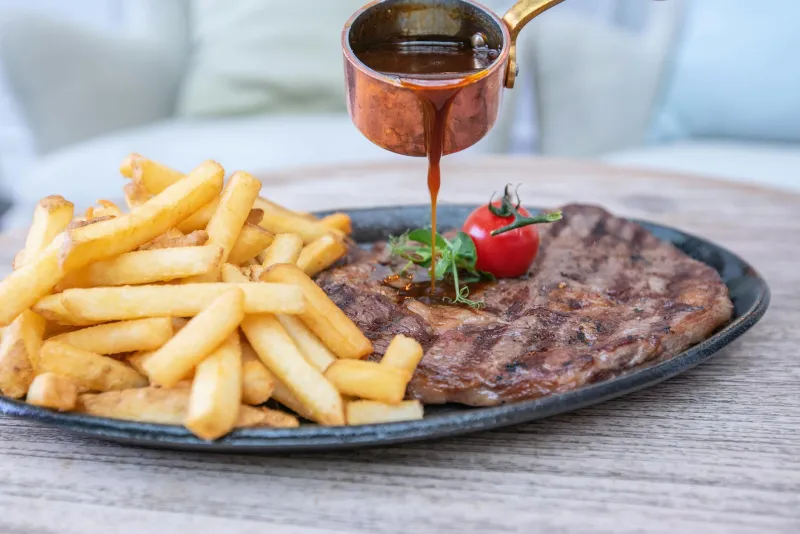
Steak frites isn't just steak with chips—it's a carefully balanced combination where each element enhances the other. The chips (proper chips, not skinny fries or wedges) provide textural contrast and a neutral canvas for the meat's flavours. They're cooked in beef dripping when possible, creating a subtle flavour bridge between potato and protein.
British sides often compete with the steak rather than complement it. Loaded potato skins, heavily dressed salads, and elaborate vegetable medleys turn dinner into a three-ring circus where nothing gets the attention it deserves.
Sauce Sense
French steak sauce isn't about covering up mistakes—it's about amplifying success. A classic béarnaise doesn't mask the flavour of well-cooked beef; it intensifies it. The tarragon and shallots in béarnaise are specifically chosen because they complement beef's mineral, savoury notes.
British steak sauce, by contrast, often seems designed to rescue failed cooking. Thick, sweet, heavily flavoured concoctions that could make cardboard palatable—which is perhaps the point. When your steak is overcooked and over-seasoned, you need something powerful to distract from the disappointment.
The Cut Above: Choosing Better Beef
French butchers and chefs prioritise flavour over appearance. They're happy to sell you a piece of bavette that looks modest but delivers intense, mineral beef flavours. British consumers often choose with their eyes, going for the biggest, most marbled piece available, regardless of how it will actually taste.
Dry-aged beef—common in French bistros—concentrates flavours and improves texture through controlled decomposition. It's becoming more available in Britain, but we're still seduced by the bright red colour of fresh meat over the darker, more complex appearance of properly aged beef.
Technique Over Theatre
French steak cookery is almost boringly straightforward: hot pan, good fat (usually butter), proper timing, adequate rest. No flipping every thirty seconds, no pressing down with spatulas, no dramatic flambéing for the neighbours' benefit.
British barbecue culture has turned steak cooking into performance art. We flip constantly, poke obsessively, and create elaborate grill marks that look impressive but actually create uneven cooking. The French approach recognises that the best technique is usually the simplest one.
The British Beef Renaissance
The good news? Britain is slowly waking up to what we're doing wrong. Independent butchers are promoting lesser-known cuts with superior flavour. Restaurants are serving properly aged beef with minimal interference. Home cooks are beginning to understand that expensive doesn't always mean better, and that technique matters more than equipment.
But we still have work to do. We need to stop being impressed by size and start caring about flavour. We need to trust that good beef, cooked simply and served with respect, is infinitely more satisfying than an over-seasoned, over-cooked monument to barbecue excess.
The Simple Truth
The French have been getting steak right for generations because they never forgot the fundamental point: you're eating beef, not a delivery system for marinades and rubs. When you start with good meat, treat it with respect, and cook it with skill rather than showmanship, you end up with something that actually tastes like what you paid for.
Perhaps it's time we stopped trying to improve on perfection and started learning how to achieve it instead.