No Shortcuts After Six: How French Cooks Bring the Kitchen to Life at Home

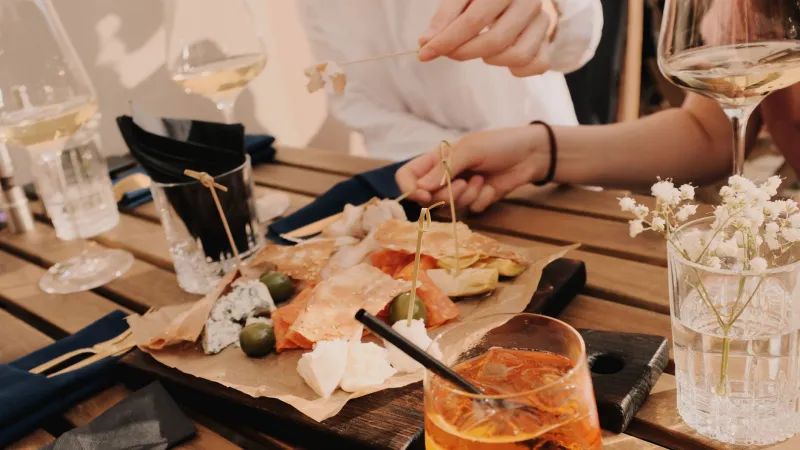
Photo by Photo by Douglas Fehr on Unsplash on Unsplash
There's a particular kind of cognitive dissonance at the heart of British cooking culture. We revere professional chefs. We watch them on television, queue for their restaurants, and buy their cookbooks in the millions. Then we go home, stare at the fridge, and reach for something that involves boiling a kettle.
In France, that gap doesn't really exist — or at least, it's considerably narrower. The French cook who has spent a decade in professional kitchens doesn't leave their standards on the pass when they head home. The apron stays on. Not literally, perhaps, but philosophically.
The Myth of the 'Off-Duty' Cook
Britain has quietly accepted the idea that weeknight cooking is a different category of activity from real cooking. It's fuel, not food. It's sustenance, not an experience. The French, broadly speaking, don't share this distinction. For a French home cook — professional or otherwise — dinner on a Wednesday carries the same basic expectations as dinner on a Sunday. The ingredients deserve attention. The technique deserves respect. The result deserves to be eaten properly, at a table, without a screen in the way.
This isn't perfectionism. It's something closer to consistency. A French chef cooking at home isn't trying to recreate the tasting menu from their restaurant. They're applying the same underlying mindset — the one that says ingredients have a right to be treated well — to whatever happens to be in the kitchen that evening.
The result might be a simple roast chicken. It might be a quick sauté of whatever looked good at the market. But the chicken will have been seasoned thoughtfully, rested properly, and served at the right temperature. The sauté will have been deglazed, finished with something acidic, and plated with a moment's consideration. These aren't grand gestures. They're habits.
What 'Professional Standards' Actually Means at Home
When we talk about professional standards, it's tempting to imagine elaborate mise en place, immaculate knife cuts, and the kind of kitchen organisation that requires labelled containers and a colour-coded chopping board system. That's not what we're describing here.
Professional standards, stripped back to their essence, are really just a set of principles: taste as you go, season at every stage, understand what heat is doing to your food, and never rush a process that requires time. None of these principles require a commercial kitchen. All of them require attention.
French home cooks — and this is particularly visible in households where someone has professional training — tend to apply these principles automatically, without drama. They're not making a statement. They're just cooking the way they were taught, because that's the way that produces good food.
The British tendency, by contrast, is to treat recipes as instruction manuals. Follow the steps, achieve the result. But recipes can't teach you what properly caramelised onions smell like, or when a sauce has reduced enough, or how a piece of fish should feel when it's just done. Those things come from paying attention, repeatedly, over time. French cooks pay attention. It's built into the culture.
The Kitchen as a Serious Space
Walk into a French home kitchen and you'll notice something that isn't always obvious in British ones: the kitchen is treated as a serious room. Not necessarily an expensive one — plenty of French home cooks work in remarkably modest spaces — but a purposeful one. Good knives. A reliable pan. Fat in the right form for the right job. These aren't luxuries. They're tools.
This extends to the ingredients themselves. A French cook buying vegetables for a weeknight dinner will still think about the season, still reject the watery tomato in favour of waiting another month. This isn't food snobbery. It's the understanding that the quality of what you put in directly determines the quality of what comes out, and that no amount of technique can rescue a fundamentally poor ingredient.
Britain has been slowly coming around to this idea — the rise of farmers' markets, the renewed interest in seasonal eating, the growing suspicion of supermarket produce that tastes of nothing — but it's still fighting against a culture that prizes convenience above almost everything else.
Bringing It Home
None of this requires a culinary education. What it requires is a willingness to treat your own kitchen as a place where standards matter, even on a Tuesday evening, even when you're tired, even when nobody's watching.
Start with the basics. Season your food properly — not just at the end, but throughout. Taste it constantly. Let things cook at the right temperature rather than cranking up the heat to save five minutes. Give yourself enough time, even if that means planning slightly further ahead.
More than anything, resist the British instinct to apologise for caring. There's a curious habit in this country of treating any enthusiasm for home cooking as slightly eccentric, as though caring how your dinner turns out is a personality flaw. French cooks don't apologise for caring. They just cook.
The professional kitchen and the home kitchen aren't as far apart as we've been led to believe. The distance between them is mostly a matter of attitude. Close that gap, and the food gets better almost immediately.