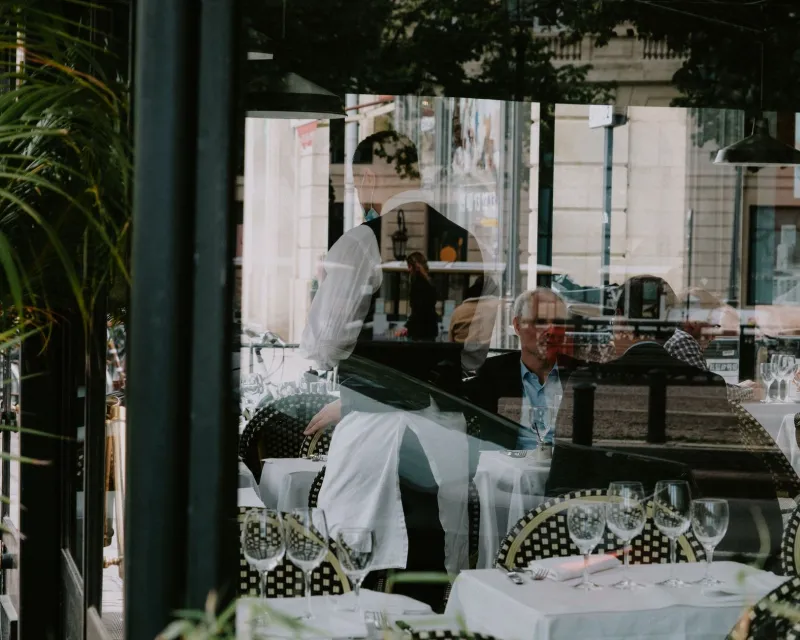
Table for One, Please: The Quiet Revolution of Eating Alone

Photo: Cynthia Magana cynthmag, CC0, via Wikimedia Commons
Somewhere between the pandemic and the price of a flat white, something shifted on Britain's high streets. People started eating out alone — properly alone, at a table, with a knife and fork, and without the protective armour of a phone scrolled at chin height. Walk into any decent café in Manchester, Bristol or Glasgow on a weekday morning and you'll find them: solo diners, settled in, looking almost... comfortable.
It would be nice to claim this as a British invention. It is not. We are, as with so many things worth adopting, about forty years behind the French.
The Corner Table Was Never an Insult
In France, the solo diner is not a problem to be managed but a customer to be served. The café terrace at 8am is full of people breakfasting alone with a newspaper folded to the crossword. Lunchtime brasseries seat business travellers and pensioners at small tables by the window with the same menu, the same bread, the same unhurried attention as any couple.
Crucially, nobody assumes anything about them. Not that they're lonely. Not that they've been stood up. They're just someone having lunch, which is a complete and sufficient description of the situation.
British hospitality, by contrast, has historically treated the solo diner as a logistical anomaly. The dreaded offer of "just you?" delivered with a sympathetic wince. The table wedged next to the toilets. The assumption that a single covers means a quick coffee, not a three-course evening. We've all felt it — that faint suggestion that you've arrived without the necessary second person, like turning up to punting without a pole.
Why It Took Us So Long
Part of the answer is structural. For decades, British eating-out culture split neatly into two offerings: the quick solo transaction (sandwich at the desk, meal deal on the train) and the social occasion (dinner as an event, always plural). There simply wasn't a middle category — the leisurely meal for one, neither refuelling nor celebration.
Part of it is social. There's a stubborn British instinct that a person sitting alone in public must be explained — waiting for someone, on a break, definitely not choosing this. Eating alone, unapologetically, has read as a small act of defiance. The French would find that baffling. In Paris, choosing a corner table and a carafe of wine for one is not defiance; it's Tuesday.
And part of it, honestly, is that we lacked the venues. Solo dining needs somewhere to be — and the Continental café, with its relaxed rhythm and no-pressure seating, is precisely that somewhere. It's no accident that the growth of solo dining in the UK tracks almost exactly with the spread of proper café and bistro culture: all-day menus, counter seats, staff who've learned that a solo guest staying two hours over one coffee is a success, not a failure.
The Revolution Will Be Seated by the Window
The change now underway is happening on both sides of the table. Diners are losing the reflex apology — the "sorry, just me" mumbled at the door. Venues, meanwhile, are discovering that solo diners are excellent customers: they book off-peak, they linger, they order what they actually want rather than splitting a decision with anyone, and they come back.
Some of this is already visible. Counter seating and window bars designed for one. Menus built for smaller appetites without the lonely-single-portion stigma. Staff trained to offer the good table — the one with the view — to the person arriving alone, rather than the one beside the kitchen door.
But the deeper shift is cultural, and it's the one worth defending. Eating alone with dignity — a newspaper or a notebook, a proper plate, no apology and no performance — is a small statement about how you relate to your own company. It says that a meal is worth having even when there's no one to perform it for. That's a very French idea. It's also, increasingly, a very British reality.
So here's a small proposal for the week: pick a café you like, go on your own, sit by the window, and order the thing you'd actually order if no one was watching — because no one is. Take your time. The French would recognise the scene instantly. It took us a while, but the corner table is finally ours too.