Pass the Salt and the Point: Why the French Think Disagreeing at Dinner Is a Compliment
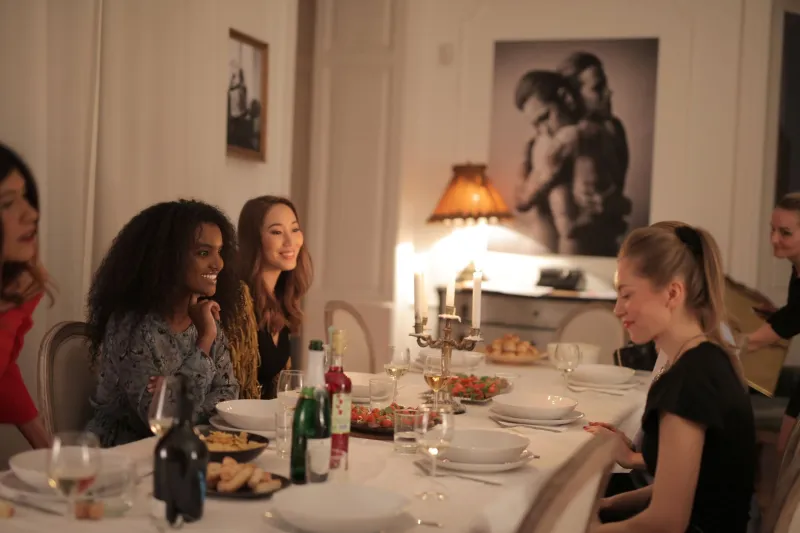
I once watched a French family spend forty-five minutes arguing about whether a particular Burgundy was ready to drink. Not in an unpleasant way — in the way that people argue when they care deeply about something and trust each other enough to say exactly what they think. Opinions were stated. Counterarguments were made. Someone refilled glasses mid-debate. By the time the cheese arrived, a provisional conclusion had been reached, immediately challenged, and the whole thing began again with the Comté.
No one apologised. No one changed the subject. No one looked uncomfortable. It was, by any French measure, a perfectly successful dinner.
Now imagine the same conversation at a British table. The host has chosen the wine. Someone ventures that it might be a touch tannic. A small silence falls. Someone else says "I think it's lovely, actually." The first person backtracks. The subject moves on. The wine remains unexamined, the evening remains pleasant, and nobody has said anything interesting.
The Politeness Trap
British table culture is built around a particular kind of generosity — the generosity of not making things awkward. We compliment the host's cooking. We find something positive to say about the wine. We don't mention that the beef is slightly overdone or that we'd have preferred a Côtes du Rhône to the Merlot that was opened. This is, on one level, kind. On another level, it's a form of conversational self-censorship that slowly drains the life out of a dinner.
The French approach to the table operates on a different set of assumptions. Disagreement about food and drink is not rude — it's engaged. If you say nothing about the wine, you might as well have not noticed it. If you eat the food without comment, you're not being polite; you're being absent. The French expectation is that everyone at the table is paying attention, and paying attention means having opinions.
This isn't about being difficult. It's about taking the meal seriously enough to think about it.
Wine as the Conversation Engine
It's not a coincidence that wine sits at the centre of this dynamic. A bottle of wine at a French table is not just a beverage — it's a subject. Where is it from? What year? Is it showing well tonight? How does it compare to the last one? Is it the right match for this dish, or would something leaner have worked better?
These questions aren't rhetorical. They're invitations. And because wine is inherently subjective — because two people can taste the same glass and genuinely arrive at different conclusions — it creates a natural space for honest disagreement that doesn't feel personal.
In British dining culture, wine is more often a background element, something that accompanies the meal rather than participates in it. The question "do you want red or white?" is about preference management, not engagement. Once the bottle is open, the subject is closed.
Opening that subject back up — making the wine part of the conversation rather than just part of the table — is one of the simplest ways to shift the energy of a British dinner towards something more lively and less performatively harmonious.
The Length of the Meal
French meals are long. This is not incidental to the quality of conversation — it's fundamental to it. You cannot have a genuinely interesting argument in the forty-five minutes that British dinner parties sometimes allocate between starter and dessert. Debate requires time to develop, to double back, to reach a provisional conclusion and then reopen it.
The structure of a French meal — the unhurried succession of courses, the pauses between them, the cheese board that creates a natural second wind — builds in the time that honest conversation needs. By the time a French table reaches the digestif, they've covered the food, the wine, something political, something personal, and returned to the food again. The meal has been a full evening, not a prelude to it.
For British hosts, this is worth considering. If you want better dinner conversation, give it more room. Slow the courses down. Don't rush to coffee. A meal that ends at eleven rather than nine-thirty isn't an imposition — it's an invitation.
How to Host a More Honest Table
None of this requires you to engineer conflict or force opinions out of reluctant guests. It requires something subtler: creating conditions in which honest engagement feels safe rather than risky.
Start by modelling it yourself. As a host, say what you actually think about the wine you've opened. Not as a complaint or an apology, but as an observation: "I think this needs another year, but let's see how it opens up." That kind of comment signals to guests that opinions are welcome, that the meal is a place for thinking as well as eating.
Ask specific questions rather than general ones. "How is everything?" invites "lovely, thank you." "Do you think the sauce needed more acidity?" invites an actual answer. Give people something to respond to.
And resist the urge to smooth over disagreement when it emerges. If two guests have different views on whether the lamb was better pink or fully cooked, let the conversation go. It's not a conflict — it's a discussion. There's a difference, and the French have always known it.
What Disagreement Actually Signals
Here's the thing that British table culture tends to miss: when someone at your table disagrees with you about the food, they're telling you they were paying attention. They noticed the dish. They thought about it. They cared enough to form a view.
That's not rudeness. In any culture that takes food seriously, it's the highest form of engagement available.
The French understand that a meal isn't just sustenance or entertainment — it's a shared act of attention. Everyone at the table is experiencing the same flavours, the same wine, the same sequence of courses. The conversation that arises from that shared experience — including the parts where people don't agree — is what turns dinner into something worth remembering.
So next time someone at your table says the dressing is too sharp or the Burgundy is too young, don't deflect. Engage. Disagree if you disagree. Concede if they've got a point.
The meal will be better for it. So will the evening.