Staying Is the Point: What French Cafés Understand About Time That British Venues Don't

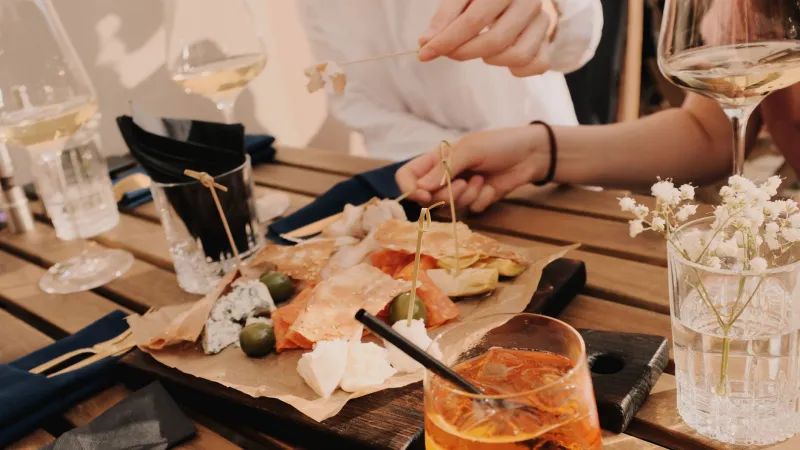
Photo by Photo by Reza Bina on Unsplash on Unsplash
There's a particular moment that every British person has experienced in a café or pub. You're halfway through a conversation, your cup is still warm, and a member of staff materialises at your elbow with the card reader already blinking. You haven't asked for the bill. You weren't planning to leave. But the message is unmistakable: your time here is up.
In France, that moment simply doesn't happen.
This isn't a small cultural quirk. It's a fundamental difference in what hospitality is understood to mean — and it shapes everything from the furniture to the business model.
A Seat Is Not a Transaction
Walk into a café in Lyon or Bordeaux and order a single espresso. That cup costs you perhaps two euros. What it also buys you, though nobody says this aloud, is the chair you're sitting in for as long as you care to occupy it. An hour. Two hours. An entire afternoon watching the street outside while your notebook fills up or your thoughts settle.
This isn't a loophole. It's the deal.
French café culture has always treated the seat itself as part of the offer. The coffee is the entry point, not the product. What you're really purchasing is access to a particular kind of time — unhurried, unmonitored, yours. The waiter who served you isn't waiting for you to leave. He has other customers, other tables, other coffees to pour. You are not a problem to be managed.
British hospitality, by contrast, has increasingly adopted a throughput model. Tables are assets. Covers per service are tracked. A table sitting occupied with two people nursing cold drinks is, in the language of the sector, a table that isn't earning. The economics are real, but the philosophy is corrosive — and customers feel it even when they can't name it.
The Paradox of Pressure
Here's the thing that British venues consistently get wrong: rushing customers out doesn't necessarily make more money. It makes different money, and often less of it.
A French café that allows lingering benefits from something far more valuable than a fast table turn: loyalty. The person who spends two hours over an espresso and a glass of water will, very likely, come back tomorrow. And the day after. They'll bring a friend on Friday. They'll recommend the place to someone visiting from out of town. The café has become part of their life, not just their itinerary.
British venues, in chasing the quick cover, often sacrifice the regulars who would have spent far more over a year than any two-hour table ever cost them. It's short-termism dressed up as efficiency.
There's also the question of what people actually spend when they're comfortable. Leave someone alone long enough and they'll order another coffee. A pastry. A glass of wine at noon because the sun is out and why not. The upsell in a French café isn't a script delivered by a server — it's the natural consequence of a person feeling so at home that they don't want to leave.
The Furniture Tells the Story
Spend time in French cafés and you start noticing things. The chairs face outward. Not toward each other across a table, but toward the street, the square, the passing world. This is deliberate. The café is designed for people who want to sit and watch and exist in public without performing anything.
British café furniture, increasingly, tells a different story. Stools at high counters. Chairs without backs. Surfaces just slightly too small for a laptop and a coffee and anything else. The message, encoded in the physical space, is the same as the hovering waiter: this is not a place to stay.
French café design assumes the customer is going to be there for a while and makes them comfortable accordingly. Padded chairs. Small round tables at a height that doesn't strain your back. Enough space between tables that you can have a conversation without your neighbour hearing every word. The room is built around the idea of staying, not the idea of leaving.
What British Venues Could Actually Do
This isn't a counsel of despair. British cafés and bistros — including the kind of French-inspired spaces that have been quietly transforming the high street over the past decade — are already beginning to understand that the hospitality transaction needs rethinking.
The shift starts with staff training. Teaching servers that a quiet table is not a failing table, that customers who aren't asking for anything are customers who are satisfied, is a cultural change but not an impossible one. The instinct to check in, to clear, to hover, is partly habit and partly performance — something done to look busy rather than because it genuinely serves the customer.
Pricing models matter too. Cafés that charge fairly for what they serve — and in some cases, a little more — can afford to let people sit. The anxiety about table turns often comes from margins that are too thin to survive a slow afternoon. Get the economics right and the philosophy follows.
And then there's simply the decision to trust your customers. To believe that the person who lingers over a second coffee is not stealing from you but investing in you. That the couple sitting quietly by the window for ninety minutes are doing something the venue should be proud of, not embarrassed by.
The Longer View
French café culture has survived for centuries not despite its relationship with time but because of it. The café endures because it offers something that no delivery app, no drive-through, no grab-and-go counter can replicate: the experience of being somewhere, properly, without the clock running against you.
Britain has the cafés, the coffee, the talent, and the appetite. What it sometimes lacks is the nerve to let people stay.
That nerve is worth finding. Because the aperitif hour — that unhurried stretch of late afternoon where nobody is quite sure when the evening begins — has no end time for a reason. The point isn't the drink. The point is the space around it. And that space, given freely, is what turns a café into something people return to for the rest of their lives.