The Invisible Ingredient: What Happens When You Cook With Time
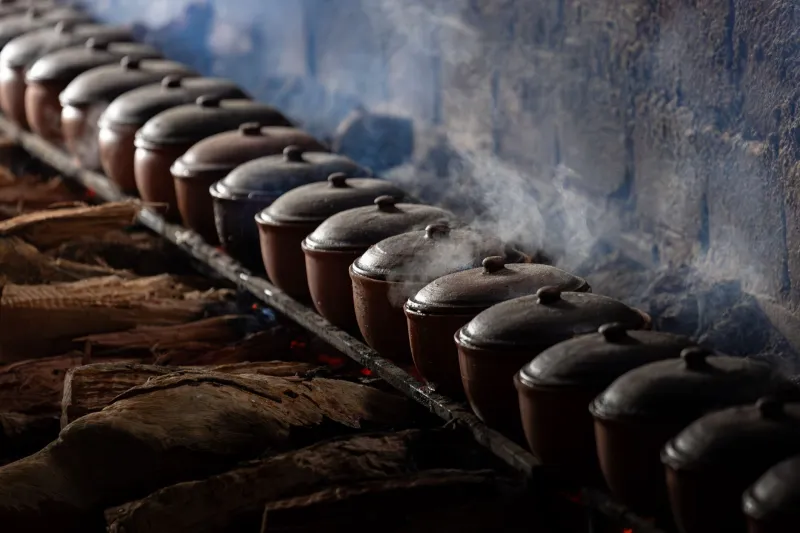
Every French home cook knows something that most British kitchens haven't fully reckoned with yet: the best flavour you can add to a dish costs nothing, requires no special equipment, and can't be bought at Waitrose. It's time. Not hours of frantic stirring, not an afternoon of complicated technique — just the deliberate, unhurried act of letting things happen at their own pace.
This isn't a romantic notion. It's practical chemistry. And once you start cooking with time as consciously as you cook with salt or heat, the food you produce will quietly, unmistakably change.
The Stock That Changes Everything
Let's start at the beginning, because that's where French cooking starts. Before the dish, before the sauce, before the shopping list — there's the stock.
A proper French fond isn't made in forty minutes from a supermarket cube. It's made from bones that have been roasted until deeply coloured, then simmered for hours with aromatics, skimmed periodically, and strained through patience rather than haste. The result isn't just a liquid — it's a foundation. A veal stock made on a Sunday afternoon will transform every sauce you make for the rest of the week.
The British kitchen has largely outsourced this step, and the trade-off is real. Cartons of stock are fine. They're convenient. But they're also flat, and no amount of reduction will give them the gelatinous body that comes from properly extracted collagen. That silky quality — the thing that makes a French sauce coat a spoon rather than slide off it — is only available through time.
The practical application here is simple: make stock on a weekend. Freeze it in ice cube trays. Use it all week. The active work is perhaps an hour. The passive work — the simmering, the doing-nothing — is the oven's job, not yours.
The Overnight Marinade
French cooks don't marinate chicken for twenty minutes before it goes in the oven. They marinate it the night before, or the morning of, or in some cases for two full days. The difference in the final dish is not subtle.
Acid, fat, aromatics, and time work together on protein in a way that a brief soak simply cannot replicate. A leg of lamb marinated overnight in wine, garlic, rosemary, and olive oil has absorbed those flavours at a molecular level. The herbs aren't sitting on the surface — they're woven into the meat. When it cooks, it tastes of itself and of everything around it simultaneously.
For British weeknight cooks, this is actually good news. The work of an overnight marinade takes about ten minutes the evening before. You're not adding active cooking time — you're just redistributing it. Put it together while you're clearing up from Monday's dinner, and Wednesday's roast is already halfway done.
Room Temperature: The Rest That Isn't Resting
This one is small but transformative. French cooks bring meat, cheese, butter, and often eggs to room temperature before they're needed. It's not fussiness — it's physics.
A cold chicken breast goes into a hot pan and the outside overcooks while the centre catches up. A room-temperature breast cooks more evenly, browns more reliably, and retains more moisture. The same principle applies to a steak, a duck breast, or a pork chop. The thirty minutes on the worktop before cooking is doing real work, even though nothing appears to be happening.
Butter at room temperature emulsifies properly. Cheese at room temperature has flavour; straight from the fridge, it mostly has texture. These aren't trivial distinctions. They're the difference between a dish that's technically correct and one that actually tastes like something.
Build the habit of taking things out early. Set a reminder if you need to. It costs nothing and returns everything.
The Slow Braise and the Weeknight Illusion
There's a misconception that slow cooking demands a slow day. It doesn't. A daube of beef, a coq au vin, a pot-au-feu — these dishes require very little of you once they're assembled. The oven does the work. Time does the work. You go about your evening.
The French have always understood this. The peasant tradition of long, slow cooking wasn't about leisure — it was about efficiency. You put the cheaper, tougher cuts in the pot in the morning, and by evening they had transformed into something extraordinary. The connective tissue had melted into the sauce. The vegetables had given themselves entirely to the liquid. The flavours had collapsed into one another in a way that no amount of clever seasoning can achieve quickly.
For a weeknight, consider this: a beef shin braise assembled in twenty minutes on a Sunday can sit in a low oven while you work from home on Monday. By Monday evening, you have something that tastes like it took all day — because it did. You just weren't involved for most of it.
Fermentation: The Long Game
French culinary culture has always made room for fermented things — wine, cheese, crème fraîche, cornichons, sourdough. These aren't specialist products. They're the ordinary building blocks of the French larder, and they all share one characteristic: they couldn't exist without time.
You don't need to start making your own cheese to absorb this lesson. But you might consider keeping crème fraîche rather than soured cream — it's tangier, richer, and more complex precisely because the fermentation has gone further. You might try making a simple quick-pickle of cucumbers or shallots in vinegar, sugar, and salt, and leaving them overnight rather than eating them immediately. The difference between a thirty-minute pickle and a twenty-four-hour one is the difference between sharp and rounded.
The Practical Philosophy
None of this requires you to become a different kind of cook overnight. It requires only a small shift in how you think about preparation.
French cooks don't experience patience as a sacrifice. They experience it as part of the process — as integral to the cooking as heat or seasoning. Time isn't something that gets in the way of a meal. It's one of the things that makes the meal what it is.
Start with one change. Make a stock this weekend. Marinate something tonight for Thursday. Take the butter out an hour before you need it. These are not grand gestures. They're small decisions that accumulate into a different kind of kitchen — one where the food consistently tastes better than the ingredients seem to justify.
That's not magic. That's what patience does.