What the Plate Is Actually Saying: A Guide to Reading French Restaurant Presentation
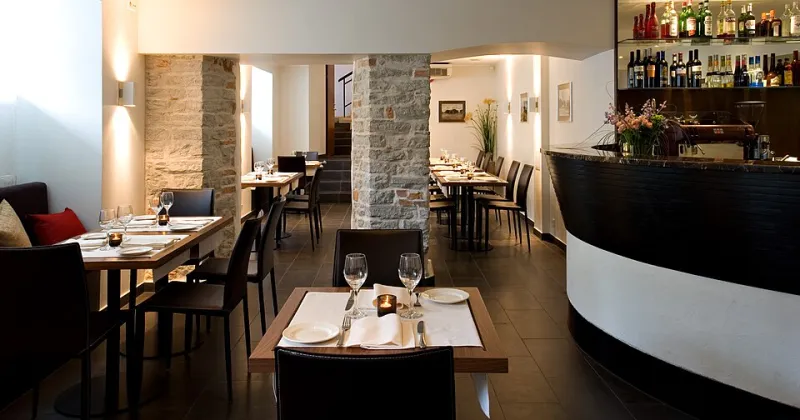
Photo: Unique Hotels, CC BY-SA 2.0, via Wikimedia Commons
We've all done it. The plate arrives and we take a photograph, post it somewhere, and then eat it. Which is fine. But somewhere between the camera and the fork, we've skipped the most interesting part: actually looking at what's in front of us and understanding what it means.
French plating — proper French plating, not the Instagram-friendly towers of food that briefly colonised every gastro-pub in Britain — is a language. It has grammar. Once you understand the basic rules, you'll never look at a restaurant plate the same way again.
The Space Around the Food
The single most telling element on a French plate isn't the food. It's the space around the food.
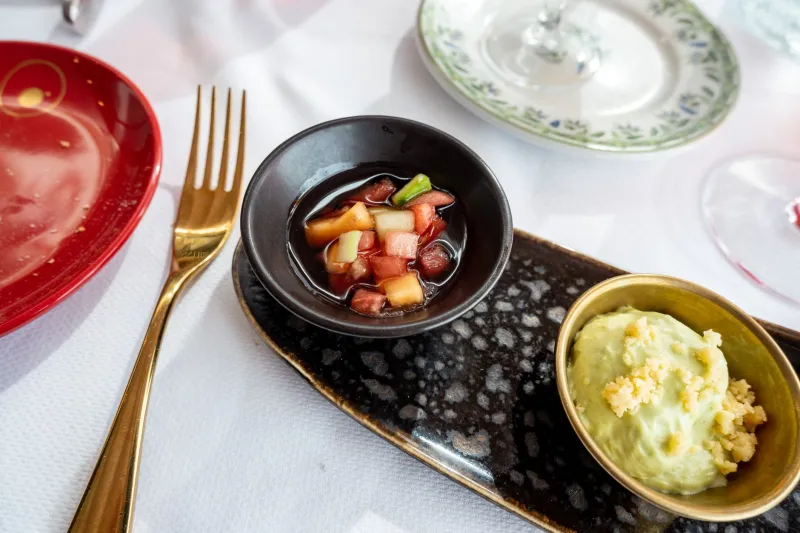
Negative space — the empty rim, the deliberate gap between elements — communicates restraint, confidence, and a particular philosophy about the diner's experience. A chef who leaves generous space around a small portion of fish is telling you something specific: this ingredient is significant enough to stand alone. It doesn't need company. Your attention is not supposed to wander.
Conversely, a plate that's crowded from edge to edge is making a different argument. It's saying abundance, generosity, the pleasure of variety. Neither is right or wrong. But they're saying different things, and understanding which conversation you're in changes how you experience the meal.
In British dining, negative space has historically been read as stinginess. We're a culture conditioned to equate full plates with value for money, which is why portion anxiety runs so deep in this country. French dining culture has a different relationship with quantity — it's not the point. The point is the quality of each element, and space is how you frame that quality.
Where the Sauce Lives
Sauce placement is one of the most expressive tools in a French chef's visual vocabulary, and one of the least discussed by diners.
A sauce poured directly over the main ingredient is a statement of integration — the chef wants you to taste the two together, as a unified thing. A sauce applied beneath the main element (a now-classic technique, and still widely used in contemporary French kitchens) does the opposite: it separates the experience slightly, asking you to decide how much of the sauce you want with each bite. It gives you agency.
A sauce applied in a smear or a stroke across one side of the plate is doing something else entirely. It's decorative, yes, but it's also directional — it draws the eye toward a specific part of the composition and implies a starting point. A good chef uses this deliberately. A less considered one does it because they saw it somewhere and it looks professional.
If you're eating at a restaurant that takes its cooking seriously, ask yourself: where is the sauce, and why? The answer will tell you a great deal about whether the chef is thinking visually or just cooking and plating by habit.
Height, Texture, and the Architecture of a Dish
French plating often builds vertically, but the purpose of height has shifted considerably over the past two decades. The stacked towers of the nineties — where every element was piled on top of the last in a kind of edible Jenga — have largely given way to a more horizontal, considered approach. When height appears now, it tends to be purposeful rather than theatrical.
A single element placed higher than the rest — a sprig of something, a crisp tile of pastry, a quenelle sitting proud of its base — is usually a signal about texture. It's the element that will provide contrast. It's asking you to notice the difference between what's soft and what's crunchy, what's yielding and what resists. The vertical element is often the one that changes the character of a mouthful.
Texture, in French plating, is not an afterthought. It's structural. A plate without textural contrast is a plate that will bore you by the third bite, however good the flavours are. Experienced diners learn to spot the textural element quickly — it's usually the thing that looks most fragile, most precarious, most likely to wilt if you don't eat it soon. Eat it soon.
The Colour Conversation
French chefs think carefully about colour, and not in the way that British food television tends to imply — it's not about making things look 'vibrant' or 'fresh'. It's about contrast and harmony, and about what colour communicates before you've tasted anything.
A plate that's predominantly one colour — all ochres and browns, say — is usually telling you something about depth of flavour. These are the dishes that have been cooked slowly, reduced carefully, built over time. The colour is honest. A plate with sharp colour contrasts — a vivid green against a deep red, a white foam against a dark sauce — is signalling complexity, multiple flavours that are meant to be experienced separately as well as together.
If everything on the plate is the same colour and the chef hasn't made that a deliberate statement, that's generally a sign that less thought has gone into the composition. Colour is easy to vary. When it isn't varied, it's usually because no one asked the question.
Learning to Look Before You Eat
This isn't about making dinner more complicated. It's about making it more interesting. Before you pick up your fork at a French restaurant — or anywhere that takes presentation seriously — give yourself thirty seconds to actually look at the plate.
Where is your eye drawn first? What's the dominant element? How much space is there? Where is the sauce? What's the highest point? These aren't trick questions. They're the questions the chef has already answered in composing the dish, and understanding those answers makes you a more engaged, more appreciative diner.
Food is communication. The plate is the first sentence. It's worth reading it properly before you move on.