A Glass on a Tuesday: The Case for Bringing Weeknight Wine Back to the British Table
Let me describe two different relationships with wine, and you can decide which sounds healthier.
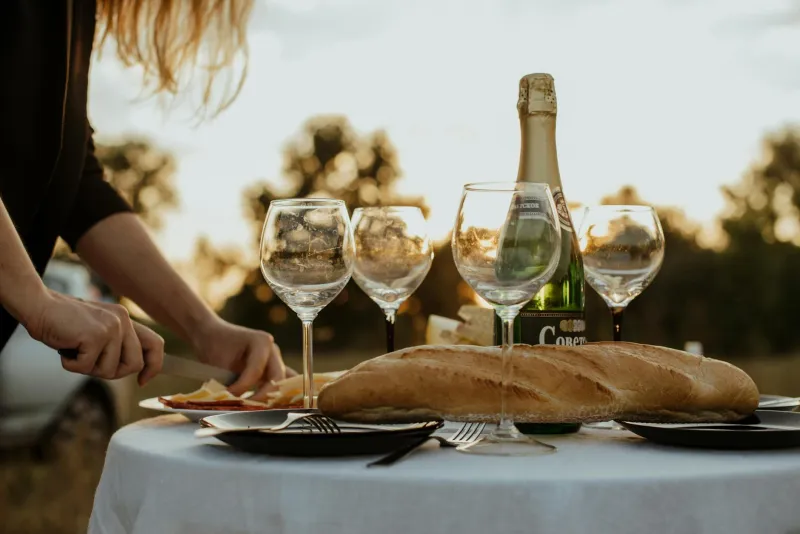
In the first, wine is drunk in modest quantities on most evenings, alongside a proper meal, without particular ceremony or guilt. It is considered a natural accompaniment to food rather than a drink in its own right. Nobody counts units. Nobody announces they're having a glass. It simply appears on the table, as the bread does, and the meal is slightly better for it.
In the second, wine is avoided during the week — because it's a weeknight, because you're being good, because you'll save it for the weekend. Then on Friday evening, the restraint collapses. A bottle disappears. Saturday involves a second. Sunday brings a mild, unspoken shame and a resolution to be better next week.
The first description is France. The second is, with some exaggeration but not much, Britain. And I'd argue — gently, without judgment — that we've managed to make the less healthy version feel like the virtuous one.
How We Got Here
Britain's relationship with alcohol is genuinely complicated, and this piece isn't going to pretend otherwise. We have real problems with drinking culture — the binge patterns, the pub-closing-time chaos, the creeping dependence that hides behind the language of self-care and "wine o'clock." These are worth taking seriously.
But the response to those problems, at least in the cultural conversation, has largely been binary. Either you drink or you don't. Either you're being good or you're being bad. Dry January, Sober October, the relentless discourse about alcohol-free alternatives — all of this frames drinking as something that requires management and containment rather than something that can be approached with simple, adult moderation.
France has never really had this conversation, because it's never needed to. The French relationship with wine is not perfect — they have their own issues with alcohol consumption, and French drinking patterns have shifted considerably over the past few decades. But the cultural framing is fundamentally different. Wine with dinner is not an indulgence. It is not a reward. It is not a coping mechanism or a social performance. It is, at its most basic, what you drink with food when you're an adult who enjoys both.
The Civilising Effect
There is something that happens when you open a bottle of wine on a Tuesday evening, pour a glass, and sit down to eat a proper meal. The evening changes shape. The transition from work to home becomes more deliberate. The meal itself — even if it's just pasta and a green salad — acquires a certain weight and intention that it might otherwise lack.
This is not about the alcohol. It's about the ritual. The act of choosing a wine, however modest, opening it, letting it breathe slightly, and pouring it into a proper glass signals something to your brain: this is the part of the day that matters. This is where we slow down.
The French have always understood this. The evening meal is not a refuelling stop. It is the main event of the day — the point at which the family (or the household, or the individual) gathers, eats properly, and actually talks to each other. Wine is part of what makes that gathering feel ceremonial without requiring any ceremony. It is, in the best possible sense, a civilising influence.
The Moderation Question
The obvious objection here is that a glass on Tuesday leads to a glass on Wednesday, which leads to a bottle by Friday, which leads to the exact problem we started with. This is a reasonable concern, and one worth addressing directly.
The French model works because the wine is secondary to the meal. You drink because you're eating, not the other way around. A standard French weeknight serving — a glass with dinner, perhaps a second if the meal is long and convivial — is roughly 150-200ml. That's not nothing, but it's a long way from a bottle. The food slows the absorption. The meal has a natural endpoint. When dinner is over, the drinking stops.
Compare that to the British weekend model, where the wine begins before dinner, continues through it, and often outlasts it. The context of the meal as a container for the drinking is lost. The result is both more alcohol consumed and less pleasure derived from it, because the wine is no longer accompanying anything — it's just being drunk.
Choosing the Right Bottle for a Tuesday
Part of what makes weeknight wine feel like a big deal in Britain is that we tend to think of wine as something that requires a decision — a special occasion, a considered choice, a reason. The French get around this by keeping house wine simple and unpretentious.
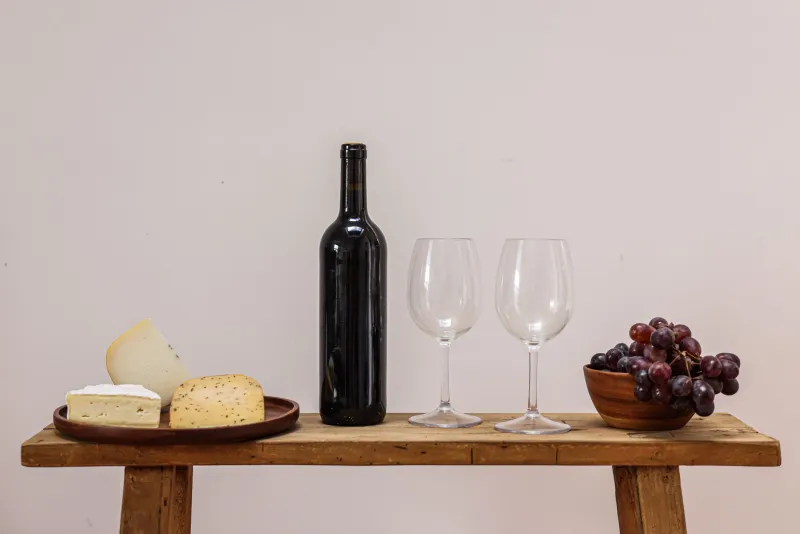
A Tuesday bottle doesn't need to be interesting. It needs to be good enough, reasonably priced, and appropriate for what you're eating. A simple Côtes du Rhône with a roast chicken. A Muscadet with fish. A Beaujolais-Villages with something meaty and quick. These are not bottles that demand attention or analysis. They are companions to a meal, not the point of it.
British supermarkets stock perfectly good wines in the eight-to-twelve-pound range that are entirely fit for this purpose. The key is to stop treating that price point as a compromise and start treating it as the sensible, sustainable baseline that it actually is.
Start Small, Start Soon
If the idea of weeknight wine feels either transgressive or mildly alarming, that's worth examining. The discomfort probably says more about Britain's fraught cultural relationship with alcohol than it does about any genuine risk. A glass of Côtes du Rhône with your Tuesday pasta is not a problem. It is, if anything, the opposite.
Start with once a week. Pick a mid-week evening when you've cooked something you're pleased with, open something modest, pour a proper glass, and sit down to eat without your phone. See whether the evening feels different. See whether the meal tastes better. See whether the transition from the working day to the domestic one becomes more distinct and more pleasurable.
My strong suspicion is that it will. And that once it does, the question of whether you're "allowed" a glass on a Tuesday will start to feel like exactly the kind of question France has never needed to ask.
At Le Café Anglais, we've always believed that the best of French food culture isn't about sophistication or exclusivity — it's about the quiet, daily pleasures that make ordinary life feel worth the trouble. A glass of wine on a Tuesday, with a proper meal and nowhere particular to be, is one of the simplest and most available of those pleasures. It would be a shame to keep saving it for the weekend.
 Photo: Le Café Anglais, via cdn.sortiraparis.com