No Eggs Benedict Required: What France's Weekend Mornings Reveal About the Brunch Illusion
No Eggs Benedict Required: What France's Weekend Mornings Reveal About the Brunch Illusion
Somewhere between the smashed avocado and the third round of bottomless prosecco, Britain decided that brunch was the greatest cultural achievement of the modern weekend. Queues snake outside restaurants in every city from Edinburgh to Exeter. Instagram fills with hollandaise-drenched stacks. Entire menus are constructed around the noble principle of combining breakfast and lunch into something that manages, somehow, to be neither.
France, meanwhile, is entirely unbothered. Walk into a French town on a Sunday morning and you won't find a single chalk board advertising brunch specials. You will, however, find a boulangerie doing extraordinary business, a café terrace full of people nursing café crèmes with quiet contentment, and a collective national understanding that lunch — proper lunch, at a proper hour — is coming. And it will be worth waiting for.
The French don't do brunch. And the more you think about it, the more you suspect that's not a gap in their culture. It's proof that their food culture actually works.
Breakfast as a Ritual, Not a Meal
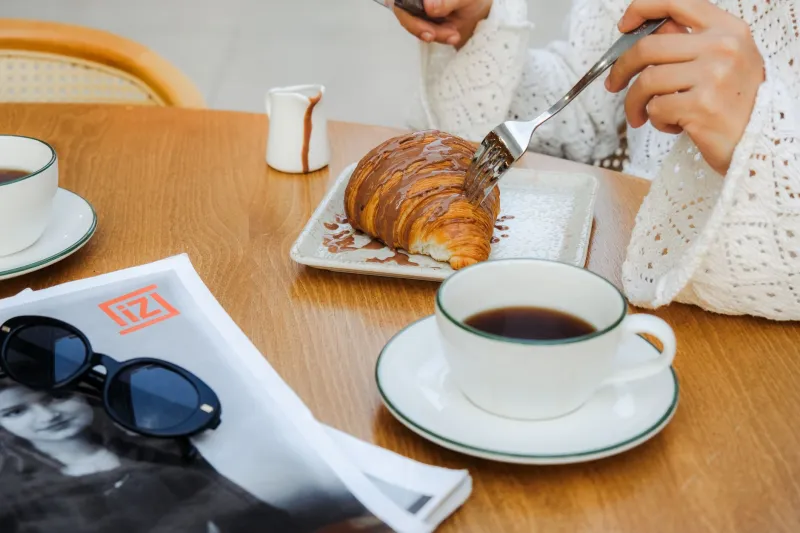
The French petit déjeuner is, by any objective measure, a modest affair. A tartine — bread and butter, perhaps with jam. A croissant if you're feeling indulgent. Coffee, almost certainly, in a form that takes the occasion seriously. That's more or less it.
What makes it work isn't the content. It's the context. The French approach breakfast with a kind of unhurried intentionality that transforms something simple into something genuinely pleasurable. There's no scrolling through emails over a bowl of cereal. There's no grabbing a protein bar on the way to the car. The morning coffee is made properly, drunk slowly, and treated as the first considered act of the day rather than a logistical problem to solve before 8am.
Crucially, it's also not trying to be anything more than what it is. French breakfast knows its role. It wakes you up, gives you something light and good, and steps aside. It doesn't attempt to carry the weight of the entire morning.
The Lunch That Makes Everything Else Unnecessary
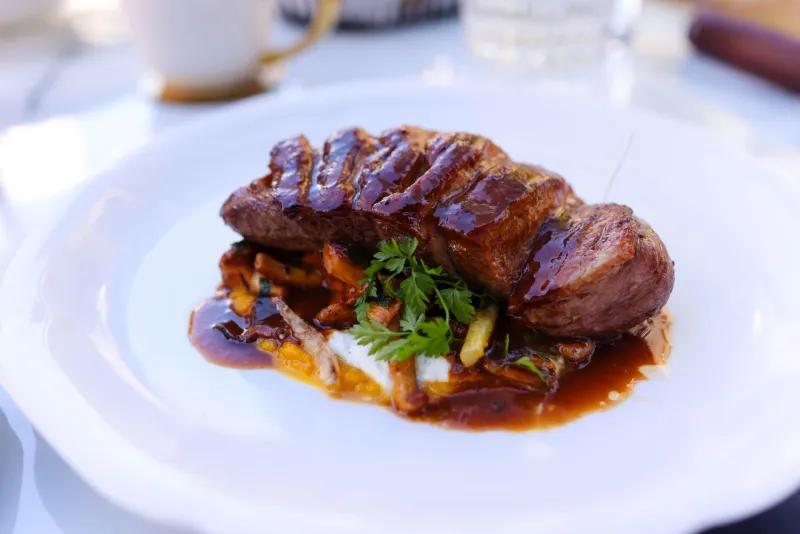
Here's the thing about French Sunday lunch: it renders the concept of brunch completely redundant. When your midday meal is a genuine, unhurried, multi-course occasion — something that begins around noon or one o'clock and doesn't feel any rush to conclude — there's no psychological or physiological need for a mid-morning hybrid meal to fill the void.
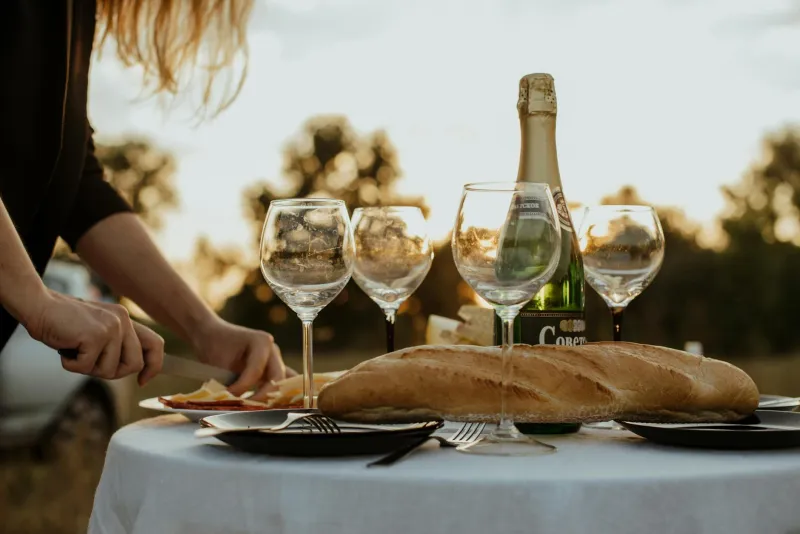
The French lunch, particularly on a Sunday, is a destination in itself. It's the reason you kept breakfast light. It's what the morning was building towards. Families gather, wine is opened at an hour that would raise British eyebrows, and the table becomes the centre of gravity for the entire day. This isn't indulgence for its own sake. It's a structural understanding that the midday meal matters — that it deserves time, attention, and a proper appetite.
Brunch, by contrast, tends to arrive when you no longer know what lunch is supposed to be. It expands to fill the space left by a meal culture that has lost its shape.
What Britain's Brunch Obsession Is Actually Telling Us
This is where the opinion part of this piece gets a little uncomfortable. Britain didn't adopt brunch because it improved on anything. It adopted brunch because there was a vacuum to fill.
British breakfast, for all its full-English glory, is either a rushed weekday non-event or a weekend treat that can tip into excess. British Sunday lunch, meanwhile — once the anchor of the week — has been steadily eroding for decades. With both of those meals under pressure, brunch arrived as a kind of compromise: a meal that didn't require you to have got up at any particular time, didn't commit to being breakfast or lunch, and came with the social permission to drink alcohol at ten in the morning.
There's nothing wrong with brunch as an occasional pleasure. But when it becomes the defining meal of the British weekend — when restaurants build their entire business model around it and people queue for an hour to get in — it starts to feel less like a celebration and more like a symptom.
A symptom of not quite knowing when to eat, or why.
The Continental Alternative
The French model won't transplant wholesale onto British life, and it doesn't need to. But there are things worth borrowing from a culture that never felt the need to invent brunch in the first place.
Treat breakfast as a small, considered ritual rather than a fuel stop. A decent coffee, something genuinely good to eat, taken without a screen in your face — that's not a French affectation, it's just a better morning. And then — and this is the important part — protect Sunday lunch. Give it time. Make it an occasion. Cook something that takes a couple of hours, open a bottle of something you actually like, and sit at the table long enough to remember why you have one.
Do that, and you'll find you don't need brunch. You'll have something better: a morning with purpose and a midday meal worth waiting for.
France worked this out a long time ago. We're still queuing for eggs Benedict, wondering why we're hungry again by three.