Beyond Brown Sauce: Building a French Condiment Table That Actually Does Something
Open a British fridge and you'll almost certainly find it: a bottle of Heinz, probably, and something dark and tangy lurking at the back. These are fine condiments. Nobody is suggesting otherwise. But as a complete philosophy of table accompaniment, the British approach — reach for the bottle, apply generously, move on — leaves rather a lot on the table. Quite literally.
The French, who have built an entire culinary civilisation on the principle that every element of a meal deserves careful consideration, approach condiments very differently. For them, what sits alongside the food is as deliberate as what's on the plate itself. The right cornichon with the right charcuterie. The right mustard with the right cut of beef. The right tapenade spread on the right piece of bread at the right moment. These are not afterthoughts. They are part of the grammar of a properly composed meal.
The encouraging news is that building a French-style condiment repertoire is neither expensive nor complicated. Most of these ingredients are available in any decent supermarket, keep for months in the fridge or cupboard, and require zero culinary skill to deploy. You just need to know what you're looking for.
Dijon Mustard: The One That Does Everything
If you own only one French condiment, make it Dijon. Not the pale, sweet English mustard that sits politely alongside a Sunday roast, but proper Dijon — sharp, punchy, and made with brown mustard seeds and white wine rather than vinegar. The flavour is more complex and considerably more versatile.
Dijon works as a condiment in the obvious sense: a small spoonful alongside a steak, a grilled pork chop, or a slice of ham. But it also functions as a cooking ingredient, a salad dressing emulsifier, and a marinade base. The French use it in vinaigrette almost universally — a teaspoon of Dijon whisked with olive oil, red wine vinegar, salt, and pepper produces a dressing that makes any salad taste like it came from a proper bistro.
Whole-grain moutarde à l'ancienne — the grainy version with its more textured, slightly milder flavour — is worth keeping alongside it. It's particularly good with cold meats and cheese.
Cornichons: The Small Things That Make a Big Difference
Britain knows the gherkin, but the cornichon is a different creature. Smaller, sharper, and less sweet than their larger cousins, cornichons are the essential French accompaniment to charcuterie, pâté, and cold meats. The acidity cuts through richness in a way that's both functional and genuinely pleasurable.
A jar of cornichons on the table alongside a board of charcuterie transforms the experience from snacking into something that feels intentional. They also belong alongside a croque monsieur, next to a slice of terrine, and — unexpectedly — in a proper tartare sauce, where they provide texture and sharpness in equal measure.
They're cheap, they last indefinitely once opened, and they take up almost no space. There is really no reason not to have them.
Tapenade: The Spread That Travels
Made from blitzed black or green olives, capers, anchovies, and olive oil, tapenade is one of those preparations that sounds more complicated than it is. A good jarred version (and there are plenty available in UK supermarkets) is perfectly respectable, though making your own takes about four minutes with a food processor.
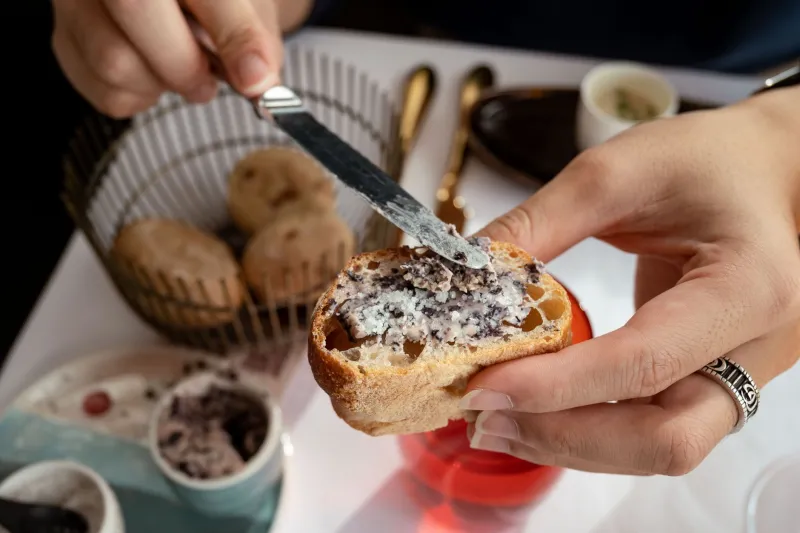
The French use tapenade as a spread on bread or toast before a meal, as a topping for grilled fish, and stirred through pasta in a pinch. It's the kind of thing that makes a simple aperitif spread — a few slices of sourdough, some olives, perhaps a little cheese — feel genuinely considered rather than thrown together.
Black tapenade has a deeper, more intense flavour. Green is brighter and slightly more herbal. Both are worth having, though if you're starting out, the black version is more versatile.
Rémoulade: Not Just for Celeriac
British diners sometimes encounter rémoulade in its most famous form — the creamy, mustardy dressing tossed with julienned celeriac that appears on French bistro starters. But rémoulade is a broader concept than a single dish. At its heart, it's a mayonnaise-based sauce sharpened with mustard, capers, cornichons, and herbs, and it functions as an all-purpose accompaniment to cold meats, fish, and vegetables.
A good rémoulade alongside cold leftover chicken or poached salmon is genuinely transformative. It's also, frankly, a better chip condiment than most things currently available on the British table — though we appreciate this is a controversial position to take.
You can make a decent rémoulade in five minutes: good quality mayonnaise, a teaspoon of Dijon, a few finely chopped cornichons, a handful of chopped capers, a squeeze of lemon, and some fresh tarragon or flat-leaf parsley if you have it. Stir, taste, adjust. Done.
Crème Fraîche: The Condiment That Doesn't Know It's a Condiment
France uses crème fraîche the way Britain uses soured cream, double cream, and occasionally yoghurt — which is to say, for almost everything. But it also functions as a table condiment in ways that British cooking rarely considers.
A spoonful of crème fraîche alongside a bowl of soup is more interesting than a swirl of cream. A dollop next to smoked salmon is cleaner and sharper than the standard cream cheese. Stirred with a little horseradish and lemon zest, it becomes an instant sauce for beef or beetroot.
Keeping crème fraîche in the fridge — which in France is simply a given — means you always have something that can elevate a plate at the last moment without any real effort.
Building the Repertoire
You don't need to buy everything at once. Start with Dijon mustard and a jar of cornichons — these two items alone will change the way your charcuterie boards and cold meat suppers feel. Add tapenade when you're next at a deli or a decent supermarket. Pick up a jar of capers (essential for rémoulade and a hundred other things) and make sure crème fraîche becomes a fridge staple rather than an occasional purchase.
The transformation won't be dramatic or sudden. It's more subtle than that — a gradual sense that meals feel more considered, that there's always something on the table that earns its place, that the gap between what you cook at home and what you eat in a good French bistro has quietly narrowed.
That, in the end, is what the French condiment table is really about. Not showmanship. Not complexity. Just the quiet assurance that every element of a meal — including what sits alongside it — has been thought about. That's a philosophy worth importing.