The Bread Basket Isn't a Luxury: It's a Welcome
The Bread Basket Isn't a Luxury: It's a Welcome
Cast your mind back to the last time you sat down in a French café or bistro — whether in Paris, Lyon, or the increasingly good approximation you can find in certain corners of London, Edinburgh, or Manchester these days. Before you had even looked at the menu properly, before the wine had arrived, before any decisions had been made at all, something appeared on the table. A basket. Some bread. Perhaps a small dish of butter, perhaps not. No announcement. No upselling. No printed card explaining that the sourdough had been cold-proofed for thirty-six hours and the butter was from a specific herd of Norman cows.
It was just bread. And it was just there.
In Britain, we have somehow managed to turn this simplest of gestures into a transaction.
How Bread Became a Starter
Somewhere in the last two decades of British restaurant culture — roughly coinciding with the rise of the gastropub, the artisan bakery boom, and our collective discovery that sourdough was, apparently, a personality trait — bread stopped being something that arrived and started being something you ordered. Or, more precisely, something you were offered. By a waiter who had been trained to describe it. At a price that made you briefly reconsider your starter choices.
The logic is not entirely unreasonable from a business perspective. Good bread costs money. A restaurant using a proper bakery, serving real butter, offering focaccia or a house sourdough with whipped cultured butter and a small pot of something expensive — they need to cover their costs. Understood. Nobody is running a charity.
But somewhere in the reasonableness of that argument, something culturally important got lost. Because bread was never meant to be a course. It was meant to be a gesture.
What France Actually Understands About Bread
The French relationship with bread at the table is inseparable from the French relationship with hospitality. When bread arrives without being asked for, it communicates something: you are welcome here, settle in, take your time. It is the edible equivalent of someone taking your coat. A small, unconditional act of generosity that sets the tone for everything that follows.
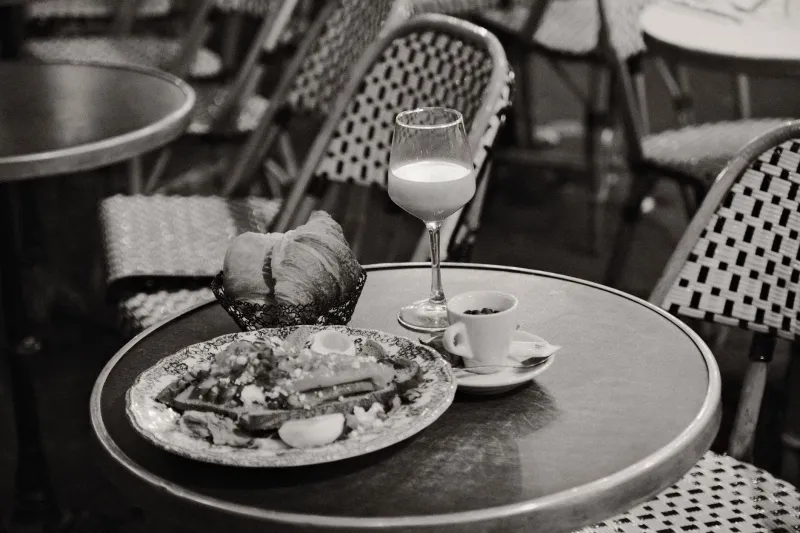
In a traditional French bistro, the bread basket is refilled without comment. It does not appear on the bill. It is not artisan, not described, not the subject of a speech. It is bread. It is on the table because you are a guest and guests get bread. The boulangerie down the road baked it this morning, the bread basket has been doing the rounds since noon, and nobody has given it a second thought — which is precisely the point.
This attitude extends to French home cooking too. Invite someone for dinner in France and bread will be on the table before the first dish arrives. Not as a talking point. Not as a demonstration of your sourdough starter. Simply as part of the fabric of the meal, the way cutlery is part of the fabric of the meal.
The Hospitality Signal We Keep Missing
There is a broader point here about what the bread basket — or its absence — signals to a guest. When a British restaurant presents bread as a premium option, it establishes, right at the start of the evening, that this is a commercial relationship. You are here to spend money, and every element of your experience has a price attached. That is not inherently wrong. But it is a particular kind of atmosphere, and it is worth asking whether it is the atmosphere we actually want.
Contrast that with the French model, where bread on the table says: the transaction is understood, but right now we are not thinking about it. Right now we are just pleased you are here. That shift — however small — changes how you feel for the rest of the meal.
Some British restaurants do still get this right. Independent bistros and neighbourhood places, particularly those with a Continental influence, often bring bread without fanfare and absorb the cost into the general fabric of the experience. They understand, instinctively, that generosity at the start of a meal creates goodwill that pays dividends all evening.
Bringing It Home
If restaurants are slow to change their ways, there is nothing stopping the rest of us from reviving the habit at home. And here, the bar is genuinely low.
A decent supermarket baguette, bought the same day, broken into pieces and put on the table before anyone sits down: that is already closer to the French tradition than anything requiring a waiter's monologue. If you want to go slightly further, a ficelle or a small pain de campagne from a local bakery, served with good unsalted butter brought to room temperature, is the kind of thing that makes guests feel genuinely looked after before a single main course has been discussed.
The point is not the quality of the bread, though quality helps. The point is the instinct behind it. Bread on the table before the meal is a statement of intent: this is a household that takes feeding people seriously, that considers the whole experience rather than just the headline dish, that understands hospitality as something that begins before the cooking does.
The Simplest Revolution
France has never needed to be told this. Bread is not a starter in French culture because it was never elevated to that status in the first place. It remained what it always was — daily, necessary, unremarkable, and quietly essential.
Britain, with its current love of artisan everything and its tendency to commodify the things it finds interesting, could do with remembering that sometimes the most hospitable gesture is also the most ordinary one. Put bread on the table. Do not charge for it. Refill it if it runs out. And let the meal begin from a place of welcome rather than commerce.
It is, after all, just bread. That is the whole point.