Slow Mornings, Simple Pleasures: What Britain Can Learn from the French Saturday Ritual
Somewhere between the smashed avocado, the artisan hot sauce, and the forty-five-minute wait for a table, British brunch lost the plot. What began as a genuinely appealing idea — a relaxed weekend meal that blurred the line between breakfast and lunch — has evolved into something closer to competitive eating theatre. The portions are enormous. The Instagram opportunities are endless. The actual enjoyment, if we're honest, is debatable.
France, meanwhile, has been quietly getting on with something far more satisfying for centuries. And it involves almost none of the fuss.
The Boulangerie Run Changes Everything
The foundation of the French Saturday morning isn't a reservation at a trendy spot in Shoreditch or a bottomless prosecco deal in Clapham. It's a walk. Specifically, a walk to the nearest boulangerie while the streets are still cool and the city hasn't fully woken up.
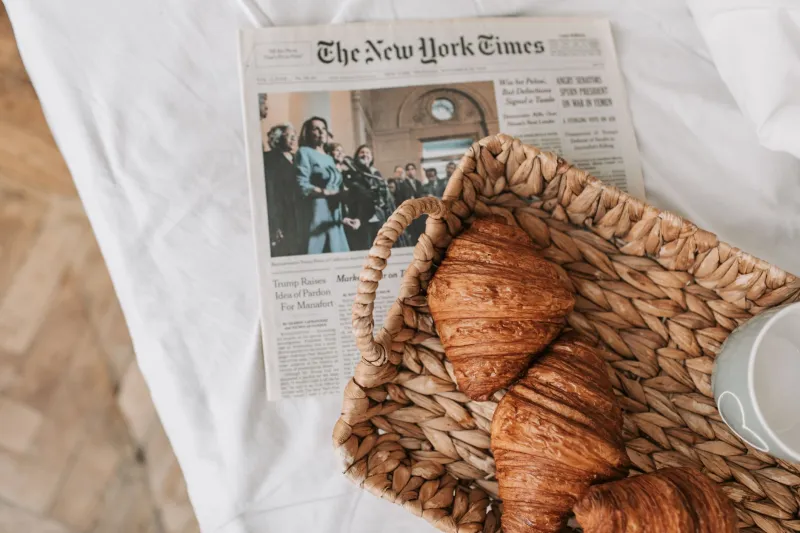
This is not a chore. In France, the morning bread run is something approaching a ritual — a brief, purposeful outing that gives the morning its shape. You go, you choose (croissant, pain au chocolat, a demi-baguette, perhaps a slice of flan pâtissier if you're feeling indulgent), you exchange a few words with the person behind the counter, and you return home. The whole thing takes twenty minutes. The return, arms full of warm pastry, is one of the small domestic pleasures that money genuinely cannot improve upon.
Britain has started to catch up here, thankfully. Neighbourhood bakeries are springing up across the country, and the quality of what's available on a Saturday morning has never been better. The infrastructure for a proper French-style morning already exists in most British towns and cities. We just haven't quite reorganised our Saturdays around it yet.
Café au Lait, Not a Production Number
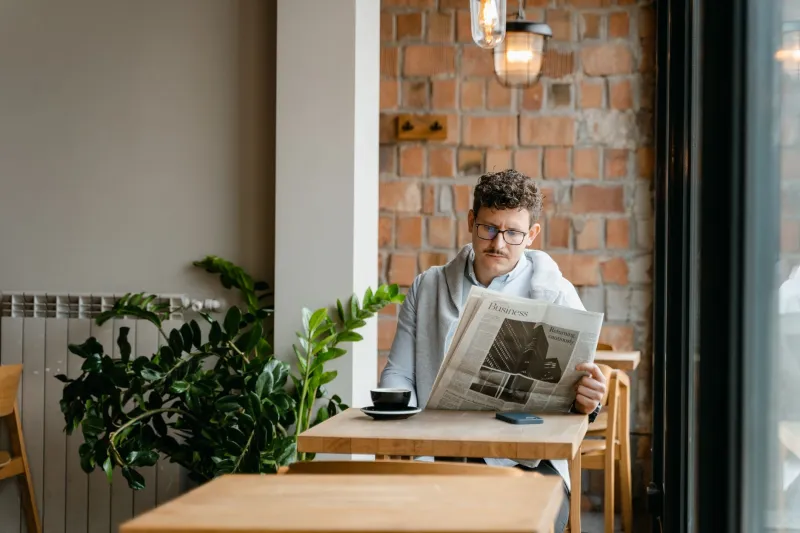
The French weekend morning drink is not a twelve-word order. It's a café au lait or a grand crème — strong coffee softened with hot milk, served in a wide, handleable bowl or a sturdy cup. It is made at home, or ordered at a neighbourhood café where the waiter already knows what you want, and it is drunk slowly, ideally while reading something or staring out of the window.
There is no oat-milk cortado with a geometric latte art swan. There is no cold brew with nitrogen. There is coffee, there is milk, there is a quiet table or a comfortable chair, and there is time. This is the point. The drink is not the event — it is the accompaniment to a morning that has been deliberately left unscheduled.
British coffee culture, which has genuinely improved beyond recognition over the past two decades, has unfortunately also become somewhat performative. We've mastered the craft of the espresso and the pour-over, but we've occasionally forgotten that the point of a good morning coffee is to make you feel settled and human, not to give you content.
What the French Actually Eat
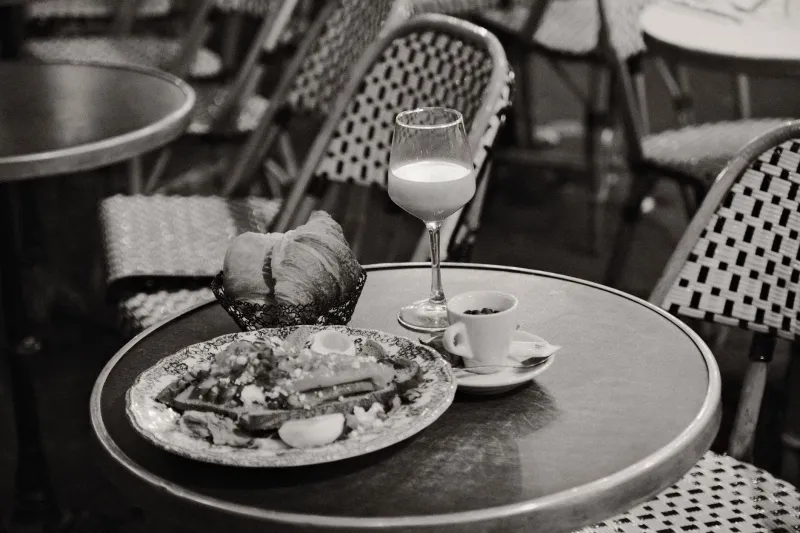
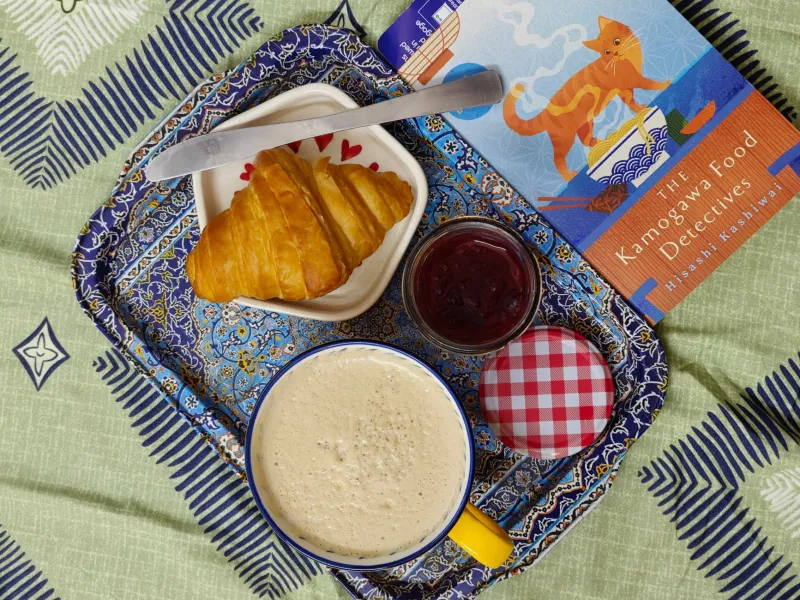
Here is what a French petit déjeuner typically involves: bread or a pastry, butter and jam, perhaps a piece of fruit, and that coffee. That's it. There is no eggs Benedict. There is no granola with activated charcoal. There is no "brunch board" arriving at the table on a piece of reclaimed wood.
This simplicity is not poverty of imagination — it is a considered position. The French understand that Saturday morning is not a meal to be conquered. It is a transition, a gentle re-entry into the weekend, a moment to collect yourself before the day actually begins. A croissant eaten slowly at a kitchen table with good coffee and no particular agenda is, in its own way, a form of luxury that no amount of truffle scrambled eggs can replicate.
The other thing worth noting: the French petit déjeuner is cheap. A proper boulangerie croissant in France costs somewhere between eighty cents and a euro. A café au lait at a neighbourhood café might set you back two euros. Compare that to the average British brunch bill — often north of twenty pounds per person before you've factored in service — and you begin to understand why the French approach might represent not just a cultural preference but a genuinely sensible life choice.
How to Build Your Own French Saturday Morning
The good news is that importing this ritual requires almost no effort and very little money. Here's how to start.
Find your boulangerie. This is the non-negotiable first step. If you have a decent artisan bakery within walking distance, you already have everything you need. If you don't, a good supermarket croissant — properly warmed in a low oven for five minutes — is a perfectly acceptable starting point while you scout your options.
Go on foot, and go early. The walk is part of the ritual. Leave the car at home. Go before nine. The morning air, the quiet streets, the sense that you've already done something purposeful before most people are awake — all of this contributes to the pleasure.
Make proper coffee at home. You don't need a professional espresso machine. A Moka pot or a cafetière produces excellent results. Make it strong, heat your milk separately, and pour both together into the biggest mug you own. Sit down before you drink it.
Leave your phone in another room. This is the hardest part for most people, and also the most important. The French morning is not a performance. It is a private pleasure. It does not need an audience.
Resist the urge to make it bigger. The temptation, once you've bought the croissants and made the coffee, is to add things. Some fruit, perhaps, or a bit of cheese, or maybe some eggs while you're at it. Resist. The point is the restraint. A croissant eaten slowly is worth three courses eaten quickly.
Less Performance, More Pleasure
British brunch culture isn't going anywhere, and nor should it — there's genuine joy to be had in a long, sociable meal with friends on a Sunday afternoon. But as a daily weekend ritual, as the thing that sets the tone for your Saturday, it's worth asking whether all that spectacle is actually making you happier.
The French would suggest, politely but firmly, that it probably isn't. That what the weekend morning really calls for is not a performance but a pause. Not a destination but a direction — towards the bakery, towards the kitchen table, towards a cup of something warm and a moment that belongs entirely to you.
At Le Café Anglais, we've always believed that the best things about French food culture aren't the grand gestures. They're the small, repeatable pleasures that make ordinary days feel considered and complete. Saturday morning, done the French way, is perhaps the best example of all.