One Coffee, No Clock: The Unwritten Rule of French Cafés That Britain Keeps Breaking
One Coffee, No Coffee Clock: The Unwritten Rule of French Cafés That Britain Keeps Breaking
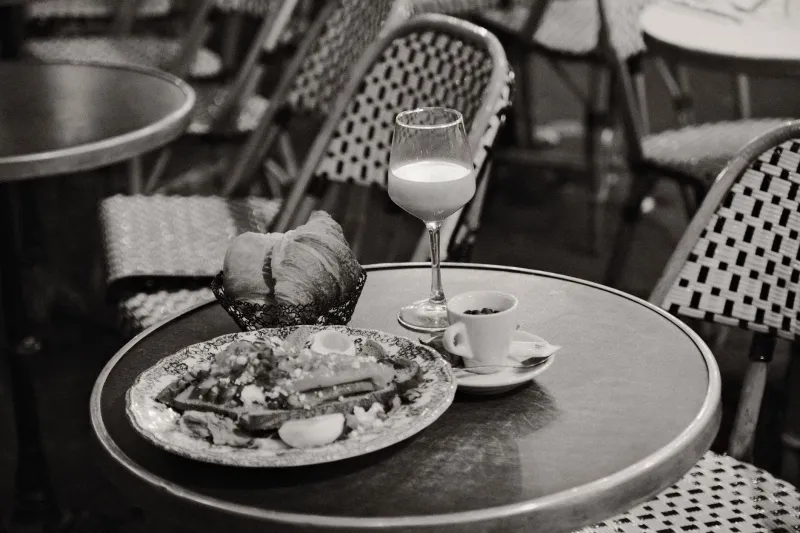
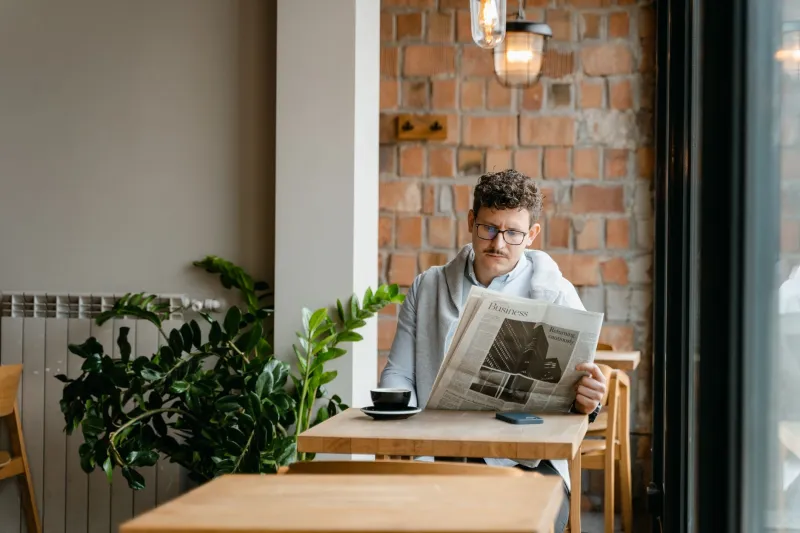
It is a Tuesday afternoon in Lyon. A man in his sixties is sitting at a corner table in a café near the Place des Terreaux. In front of him: a demitasse, long since emptied. A newspaper, thoroughly read. A small glass of water. He has been there for the better part of two hours. Nobody has approached him with a pointed enquiry about whether he'd like anything else. Nobody has placed a bill on his table as a gentle suggestion that his time is up. The waiter, who has passed his table perhaps a dozen times, has not once met his eye with that particular expression — the one British hospitality staff have elevated to an art form — that communicates volumes without saying a word.
 Photo: Place des Terreaux, via www.guide-lyon.fr
The man will leave when he is ready. This is understood by everyone present. It is, in the most fundamental sense, what the café is for.
The Contract Nobody Signs
French café culture operates on an unspoken agreement that is so deeply embedded it rarely needs articulating. When you sit down and order — even if you order only the smallest, cheapest item on the menu — you have entered into a social contract that grants you occupation of that space for as long as you reasonably wish to occupy it. The café is not a transaction point. It is not a machine for generating covers per hour. It is a public room, available to anyone who buys a coffee, and the coffee is less a purchase than an admission fee.
This philosophy has roots that run deep into French social history. The café emerged as a democratic institution — a place where the bourgeois and the working man, the student and the philosopher, could occupy the same space on equal terms. Voltaire reportedly drank forty cups of coffee a day at the Café de Procope. Sartre and de Beauvoir wrote entire books at Les Deux Magots. The café was, and in many places still is, an extension of civic life: somewhere to think, to meet, to read, to argue, to do nothing at all with great deliberateness.
 Photo: Les Deux Magots, via i.pinimg.com
 Photo: Café de Procope, via snippetsofparis.com
The idea that you might be asked to leave, or subtly pressured to order more, would be a violation of the entire premise.
What Britain Does Instead
The British café experience, by contrast, has largely been shaped by a different set of priorities. Table-turning — the practice of moving customers through as quickly as possible to maximise revenue per seat — has become the default logic of the high street café, and it has produced an atmosphere that is, to put it charitably, not particularly conducive to lingering.
You'll recognise the signs. The bill delivered with the coffee, before you've had a chance to think about a second. The reserved signs appearing on tables around you, implying a demand that the data doesn't always support. The staff member who appears at your elbow at the precise moment you've put down your cup, asking if there's "anything else" with an intonation that makes clear the preferred answer is "no, just the bill please." The café chains that have installed hard, uncomfortable seating specifically designed to discourage extended occupation.
All of this is understandable from a pure business perspective, particularly given the brutal economics of the UK hospitality sector. But it creates an environment in which the café is experienced as a vending machine rather than a destination — somewhere you stop rather than somewhere you stay.
The Living Room We've Lost
There's a social cost to this that goes beyond the individual experience of feeling rushed over a flat white. The French café functions as what sociologists call a "third place" — somewhere that is neither home nor work, but a shared public space where community life happens informally and organically. Third places matter enormously to the health of a neighbourhood. They're where people encounter each other without agenda, where conversations happen by accident, where a degree of civic belonging is quietly maintained.
Britain's high streets are struggling, and one of the reasons — not the only one, but a real one — is that we've never quite developed the infrastructure of genuine third places. Our pubs come closest, and they're disappearing at an alarming rate. Our cafés, meanwhile, have largely positioned themselves as quick-service operations rather than places to inhabit. The result is that there's increasingly nowhere to simply be in public without spending money at regular intervals.
The French model suggests a different possibility. A café that genuinely welcomes you to stay — that treats the single coffee as a sufficient contribution to the social contract — builds loyalty, community, and a reputation that no amount of loyalty card schemes can replicate. People return to places where they felt at ease. They recommend places where they were treated like guests rather than units of throughput.
Could It Work Here?
The honest answer is: it would require a leap of faith that most British café operators aren't currently positioned to take. Rent, rates, and staffing costs in the UK make the French model genuinely difficult to replicate on purely financial grounds. French cafés exist within a different economic and cultural ecosystem — one in which the café is considered a social utility as much as a business.
But there are things that can shift without restructuring the entire economy. The atmosphere of welcome — the sense that a customer who sits quietly with a single drink is not a problem to be managed — costs nothing to create. The absence of the hovering waiter, the withheld bill, the table that isn't suddenly needed the moment you've finished your cup: these are choices, not economic necessities.
Some independent British cafés are already getting this right. The ones that do tend to develop a regulars culture — a community of people who treat the place as their own — that sustains them through the lean patches and builds something no chain can buy. It's not a coincidence that these are often the cafés with the most French sensibility: unhurried, generous with space, quietly confident that a customer who stays for two hours over one coffee will come back tomorrow and the day after.
The French café doesn't just sell coffee. It sells the permission to exist somewhere pleasant without justifying your presence every fifteen minutes. In a country that increasingly struggles to offer its citizens anywhere to simply be, that permission might be worth more than we've given it credit for.
Order the espresso. Stay as long as you like. That's the deal. Britain just needs to learn to mean it.