Before the First Course: What the French Apéritif Ritual Can Teach Britain About the Art of Arrival
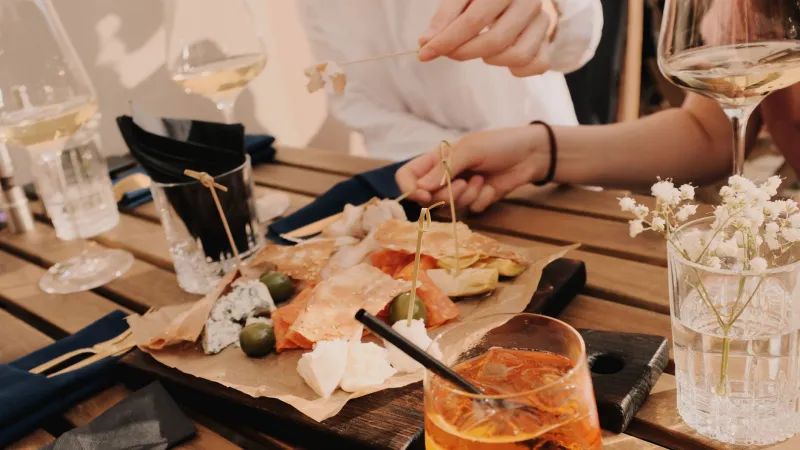
There's a moment in any French household, somewhere between half past six and seven in the evening, when something quietly shifts. The kitchen hum softens. Someone opens a bottle — not wine, not yet — and a small plate appears on the table. Nothing elaborate. Perhaps a handful of olives, a few slices of saucisson, a small bowl of salted almonds. The conversation changes register. The day, finally, is done.
This is the apéritif hour. And if you've only ever encountered it as a fancy word on a cocktail menu, you've missed the whole point.
Britain, to its credit, has never been shy about pre-dinner drinks. The pub round before a restaurant booking, the bottle of Prosecco cracked open the moment guests arrive, the gin poured generously while someone debates what to order for takeaway — we are not a nation that struggles with the concept of drinking before eating. What we've never quite managed, though, is drinking with intention before eating. And that distinction is everything.
What Apéritif Actually Means
The word comes from the Latin aperire — to open. And that's precisely what it's designed to do: open the appetite, not suppress it. The entire logic of the apéritif runs counter to the British instinct to fill up, to get started, to make an occasion of the pre-dinner window in a way that leaves everyone slightly too full and a little too drunk before the food even arrives.
In France, the apéritif is a considered ritual with its own grammar. The drinks are specific — lighter, lower in alcohol, often bitter or gently sparkling — because they're chosen to stimulate rather than sedate. A glass of Lillet Blanc, a Kir, a pastis diluted with cold water, a simple glass of Crémant. Nothing designed to knock you sideways. The nibbles that accompany them are equally purposeful: small, savoury, not filling. A gougère or two. Radishes with butter and flaky salt. A thin slice of tapenade on toast.
The point is not to eat. The point is to prepare.
Why Britain Keeps Getting It Wrong
The British pre-dinner tradition tends to fall into one of two traps. The first is the all-out hosting performance — a table groaning with dips, crisps, mini sausage rolls, and enough food to constitute a meal in itself, leaving guests politely pushing their starter around the plate an hour later. The second is the opposite: drinks with nothing at all, which means someone's had three large glasses of Sauvignon Blanc on an empty stomach before the roast even comes out of the oven.
Neither approach serves the dinner. Both, in their own way, undermine it.
The French apéritif works because it's bounded. It has a beginning and an end. It lasts perhaps forty-five minutes to an hour, and then the table is cleared, the proper wine is opened, and everyone sits down. The transition is marked. It signals to the body — and to the guests — that something is about to happen.
The Right Drinks for the Ritual
You don't need a French drinks cabinet to do this properly. A few bottles, chosen thoughtfully, will see you through most occasions.
Kir is the simplest starting point: white Burgundy (or any dry white) with a splash of blackcurrant liqueur. It's gentle, it's pretty, and it takes about thirty seconds to make. For something a little more interesting, a Kir Royale uses Crémant — France's more affordable answer to Champagne — and feels considerably more celebratory than the price tag suggests.
Lillet Blanc, served over ice with an orange slice, is one of the great underrated apéritif wines. It's available in most Waitrose and Majestic branches and costs very little. Pastis — the anise-flavoured spirit of Provence — is an acquired taste, but diluted four-to-one with cold water and served with ice, it's one of the most genuinely refreshing pre-dinner drinks imaginable, particularly in summer.
For those avoiding alcohol, a good sparkling water with a slice of lemon and a few drops of elderflower cordial does the job admirably. The ritual matters more than the liquid.
The Nibbles: Small but Non-Negotiable
The French word for the small bites served during apéritif is amuse-bouche in restaurant settings, or more casually, les petites choses — the little things. And little is the operative word.
A small bowl of Marcona almonds, warmed in the oven with a pinch of smoked paprika. Cornichons alongside a soft cheese. Thin slices of good charcuterie — a Bayonne ham, a rosette de Lyon — draped over a board with a few crackers. Or, if you're feeling ambitious, a batch of gougères: small choux pastry puffs made with Gruyère. They take half an hour and they are, frankly, transformative. Guests who receive a warm gougère the moment they arrive are guests who feel genuinely welcomed.
The rule is restraint. Two or three things, not ten. Enough to taste, not enough to fill.
Bringing It Home
You don't need to be hosting a dinner party to make the apéritif work. This is, at its core, a weeknight ritual — a way of marking the end of the working day and the beginning of the evening with a little more intention than collapsing onto the sofa with a large glass of whatever's open.
Try it on a Friday. Pour something light and deliberate — a small glass of Crémant, a Kir, even a good vermouth over ice. Put a few olives in a bowl. Sit somewhere that isn't in front of a screen. Give it forty-five minutes before you think about dinner. Notice how differently the evening unfolds.
The French have understood something about the architecture of a meal that extends well beyond the food itself. A good dinner doesn't begin when the starter arrives. It begins in the pause before — in the deliberate, unhurried act of arrival. The apéritif is that pause made ritual. And once you've experienced it properly, the idea of skipping it feels, somehow, like starting a story halfway through.