The Fat That Changes Everything: Why French Cooking Begins with Butter
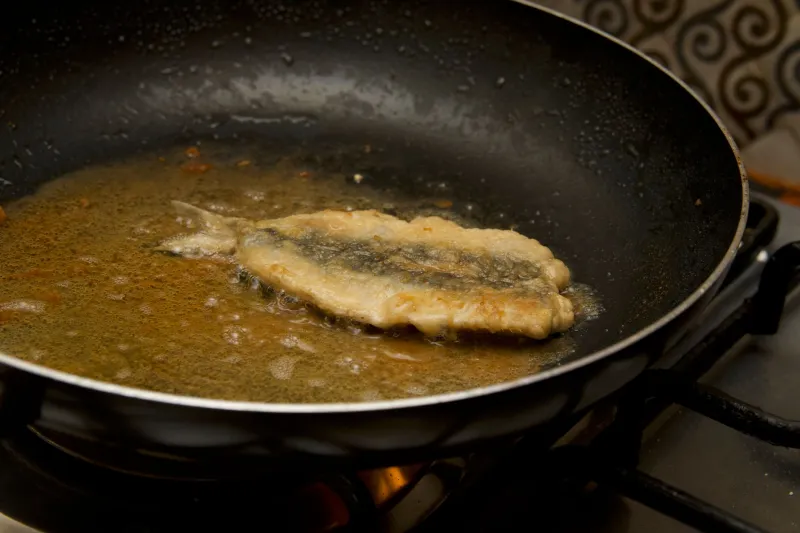
Most British home cooks treat cooking fat as a background decision. Whatever's in the cupboard goes in the pan — a glug of vegetable oil, a spray of low-calorie something, occasionally a knob of butter if the recipe specifies it. The fat is infrastructure, not ingredient. It's what stops things sticking. It's what you add before the real cooking starts.
In France, this thinking is essentially reversed. The choice of fat — and specifically the choice to use butter, how much of it, and in what form — is one of the first and most consequential decisions a cook makes. It isn't incidental to the dish. It is, in a very real sense, the beginning of the dish. And once you start thinking that way, everything tastes different.
Where Britain Goes Wrong (Gently Speaking)
Britain's relationship with cooking fat has been shaped by decades of conflicting dietary advice, the rise of convenience cooking, and an honest cultural pragmatism that prizes ease over precision. Sunflower oil is neutral and doesn't burn easily. Olive oil is fashionable and carries health associations. Butter is delicious but feels indulgent, so it gets rationed — a scrape on toast, a small knob stirred in at the end to make a sauce look glossy.
This approach isn't wrong, exactly. But it misses something fundamental that French cooking has understood for centuries: different fats behave differently at different temperatures, carry different flavour compounds, and interact differently with other ingredients. Using the wrong fat at the wrong moment doesn't just affect taste — it affects texture, colour, and the entire chemistry of what you're cooking.
French cuisine's consistent preference for butter isn't nostalgia or stubbornness. It's a practical judgement, made dish by dish, about which fat will produce the best result.
What Makes French Butter Different
Before we get to technique, it's worth understanding the material itself. French butter is not the same as standard British supermarket butter, and the difference matters.
French butter typically has a fat content of around 84 per cent, compared to the 80 per cent minimum required in the UK. That four per cent gap might sound trivial, but it has real consequences. Higher fat content means less water, which means less spattering when the butter hits a hot pan, a richer flavour, and a better result when emulsifying into sauces. French butter also tends to be cultured — made from cream that has been fermented before churning — which gives it a subtle, slightly tangy complexity that standard sweet cream butter lacks.
Brands like Beurre d'Isigny and Président are widely available in British supermarkets and both Waitrose and Marks & Spencer stock good French-style cultured butters. The price difference over standard British block butter is modest, and for everyday cooking it's a worthwhile upgrade. For pastry, sauces, and anything where butter is a primary flavour, it's close to essential.
 Photo: Marks & Spencer, via madira.ro
 Photo: Beurre d'Isigny, via listimg.pinclipart.com
Whole Butter: When and Why
For most everyday cooking — sautéing vegetables, making omelettes, finishing a pan sauce, cooking fish — whole unsalted butter is the French default. It adds flavour, promotes browning through the Maillard reaction, and creates a richness that neutral oils simply cannot replicate.
The key is managing heat. Whole butter begins to brown at around 150°C and burns at around 175°C. This isn't a limitation — it's information. A French cook uses that browning window deliberately. Beurre noisette — butter cooked until the milk solids turn golden and the whole thing smells of hazelnuts — is one of the simplest and most transformative things you can do in a kitchen. Poured over pan-fried fish, tossed through gnocchi, or drizzled over roasted cauliflower, it elevates the ordinary into something genuinely memorable.
For dishes that require higher heat — searing a steak, for instance — whole butter alone will burn. The French solution is not to abandon butter but to combine it: start with a small amount of neutral oil to raise the smoke threshold, then add butter partway through cooking to build flavour and colour. It's a technique that produces results noticeably better than oil alone.
Clarified Butter: The High-Heat Solution
When a recipe genuinely demands sustained high heat, clarified butter is the answer. Clarifying removes the milk solids and water from butter, leaving behind almost pure butterfat with a smoke point of around 250°C — well above that of whole butter and comparable to most refined vegetable oils. Crucially, it retains the fat-soluble flavour compounds that make butter taste like butter, so you get the high heat performance without sacrificing character.
Making clarified butter at home takes about ten minutes: gently melt unsalted butter in a saucepan, skim the foam from the surface, and carefully pour off the clear golden liquid, leaving the white milk solids behind in the pan. Store it in a jar in the fridge and it keeps for weeks. Use it for sautéing potatoes, cooking eggs when you want a clean, even result, or anywhere you'd otherwise reach for vegetable oil but want something with more personality.
Ghee, the South Asian equivalent, is essentially clarified butter taken slightly further — cooked until the milk solids are toasted before removal — and works beautifully in the same applications if you happen to have it to hand.
The Sauce Question
French sauce-making is, at its heart, a study in what butter can do. Beurre blanc — a white wine and shallot reduction finished with cold butter whisked in piece by piece — is the most elegant demonstration of butter's capacity to form a stable, silky emulsion. Hollandaise is the same principle applied to egg yolks. Even a simple pan sauce — deglaze with wine, reduce, finish with cold butter — relies on the same technique: cold butter, added gradually, transforms a thin liquid into something with body and sheen.
The British instinct, when a sauce looks thin, is often to add flour or cornflour. The French instinct is to add butter. Both thicken; only one also enriches, rounds, and adds flavour simultaneously.
A Different Starting Point
Changing your relationship with butter doesn't require buying a new set of pans or overhauling your weekly shop. It starts with a single shift in thinking: before you pour anything into a pan, ask yourself what you actually want the fat to do. If you want flavour, richness, and a beautiful golden colour, butter is almost certainly the right answer. If you need very high heat for a sustained period, clarify it first or use a small amount of oil alongside.
French cooking doesn't use butter out of habit. It uses butter because, for the vast majority of what happens in a domestic kitchen, butter produces a better result than any of the alternatives. Once you start cooking with that conviction rather than treating fat as an afterthought, the difference in your food will be immediate, obvious, and entirely worth the extra few grams.