Stop Looking for the Grape: How to Actually Read a French Wine Label
You're standing in the wine aisle. You want something French. You pick up a bottle — and it says something like Pouilly-Fumé or Saint-Émilion Grand Cru or simply Côtes du Rhône. There's no mention of Sauvignon Blanc, Merlot, or Grenache anywhere. You put it back and reach for the Australian Shiraz because at least that tells you what's inside.
If this sounds familiar, you're not alone. Millions of British wine drinkers default to New World bottles — Australian, Chilean, South African, Californian — not because they prefer them, but because New World labels are written in a language we've been trained to understand. Grape first, everything else second. France does it differently, and once you understand why, a whole universe of wine opens up.
Why France Labels by Place, Not Grape
The French concept of terroir — loosely, the idea that where a grape is grown shapes the wine more profoundly than any other factor — is the key to everything. For French winemakers, telling you it's Cabernet Sauvignon is almost beside the point. What matters is that it's from this specific valley, this particular hillside, this exact patch of limestone soil. The place, in French wine culture, is the product.
This thinking gave rise to the Appellation d'Origine Contrôlée system — the AOC — which regulates not just where wine can be called what, but which grapes can be used, how the vines must be managed, and even how much wine a hectare can produce. It's a framework designed to protect distinctiveness, to ensure that a bottle labelled Burgundy genuinely tastes like Burgundy and nothing else.
For British drinkers, the practical upshot is this: once you know which grape varieties are used in which regions, French labels stop being baffling and start being genuinely informative. You're not missing the grape information — it's encoded in the place name.
Bordeaux: Blends and Châteaux
Bordeaux is France's most internationally recognised wine region, and its reds are almost always blends — predominantly Cabernet Sauvignon on the Left Bank (Médoc, Pauillac, Saint-Estèphe) and Merlot-dominant on the Right Bank (Saint-Émilion, Pomerol). When a label says Margaux or Pauillac, it's telling you you're in Cabernet country: structured, tannic, built for ageing. Saint-Émilion signals something rounder and more immediately approachable.
Bordeaux whites are mostly Sauvignon Blanc and Sémillon blends — Pessac-Léognan being the region's finest expression. The sweet wine Sauternes, made from botrytis-affected Sémillon, is one of the world's great dessert wines and worth seeking out even in half-bottle form.
For everyday drinking, look for bottles labelled simply Bordeaux AOC or Bordeaux Supérieur — these represent the region's entry level and offer genuine quality at accessible prices.
Burgundy: Where Pinot Noir and Chardonnay Reign
Burgundy (Bourgogne) is simpler in one sense — it's almost exclusively Pinot Noir for reds and Chardonnay for whites. But it's also the region where the concept of terroir reaches its most intricate expression, with individual vineyard plots (lieux-dits) classified into a hierarchy that runs from regional AOC through village wines up to Premier Cru and Grand Cru.
A bottle labelled Bourgogne Rouge is regional Pinot Noir — good, honest wine. Gevrey-Chambertin is a village-level wine from one of the Côte de Nuits' most celebrated communes. Chambertin alone, with no village name attached, is a Grand Cru — a tiny, specific vineyard producing some of the most sought-after wine on earth.
For British buyers, the sweet spot is often village-level Burgundy from less fashionable communes — Marsannay, Fixin, or Monthelie in reds; Saint-Aubin or Rully in whites — where quality is high and prices haven't yet reached the stratosphere.
The Loire: Variety in a Single Valley
The Loire Valley is France's most diverse wine region, stretching from the Atlantic coast nearly to the centre of the country and producing everything from bone-dry Muscadet to rich, honeyed Chenin Blanc dessert wines.
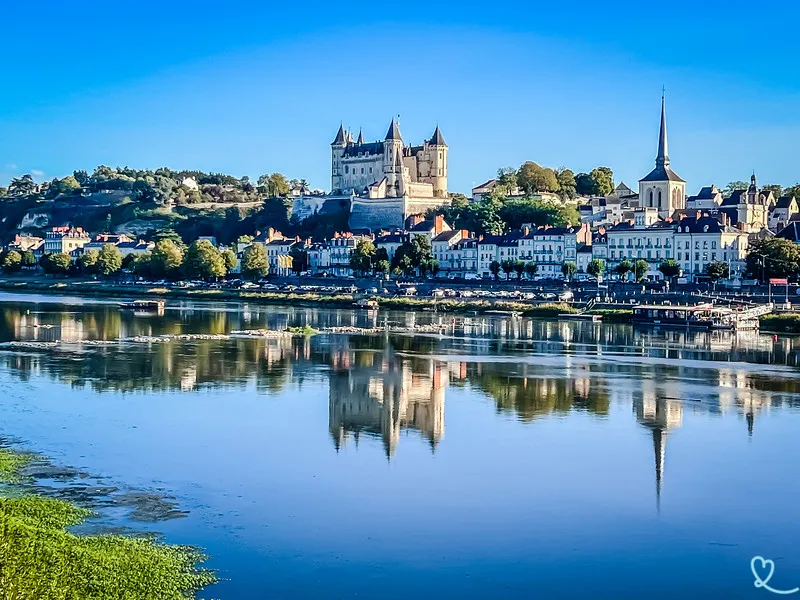 Photo: Loire Valley, via photos.smugmug.com
In the west, Muscadet (made from Melon de Bourgogne) is the classic oyster wine — lean, saline, and brilliant with seafood. Look for Muscadet Sèvre et Maine sur lie for the best examples, aged on their lees for extra texture. Moving east, Sancerre and Pouilly-Fumé are both Sauvignon Blanc — and arguably the finest expressions of that grape anywhere in the world, with a mineral precision that New World versions rarely match.
Chenin Blanc is the Loire's great shapeshifter, appearing dry (Savennières), off-dry (Vouvray demi-sec), and lusciously sweet (Coteaux du Layon). Reds from Chinon and Bourgueil, made from Cabernet Franc, are lighter and earthier than Bordeaux — wonderful served slightly cool with charcuterie.
The Rhône: North and South, Two Different Worlds
The Rhône Valley divides neatly into two distinct personalities. The Northern Rhône — Hermitage, Crozes-Hermitage, Côte-Rôtie, Saint-Joseph — produces powerful, age-worthy Syrah reds and some of France's finest white wines from Viognier (Condrieu) and Marsanne/Roussanne blends.
The Southern Rhône is warmer, more Mediterranean, and built on blends. Châteauneuf-du-Pape can use up to eighteen grape varieties, though Grenache typically dominates. Côtes du Rhône and Côtes du Rhône Villages are the everyday workhorses — reliable, food-friendly, and consistently good value.
For British drinkers looking for a starting point, a well-chosen Côtes du Rhône Villages from a named commune (Cairanne, Rasteau, Séguret) offers real regional character without requiring a significant investment.
A Practical Shortcut
The easiest way to start reading French labels with confidence is to memorise just four pairings: Burgundy equals Pinot Noir or Chardonnay. Bordeaux means Cabernet or Merlot blends. Sancerre means Sauvignon Blanc. Côtes du Rhône means Grenache-based blends. Those four associations will unlock the majority of French bottles you'll encounter on a British supermarket shelf or bistro wine list.
From there, the curiosity tends to take over. You try a Chablis and discover what Chardonnay tastes like without oak. You find a Crozes-Hermitage and realise Syrah can be both earthy and elegant. The label stops being an obstacle and becomes an invitation — to a specific hillside, a particular climate, a winemaker's particular vision of what this patch of France can produce.
That's what France has been trying to tell you all along.