Sunday's Second Act: The French Evening Meal That Could Save Your Weekend
The Sunday Evening Slump
It's half past seven on a Sunday evening, and across Britain, the same scene plays out in countless kitchens. The washing-up from lunch still sits in the sink, the fridge contains an odd assortment of half-finished dishes, and the question hangs heavy in the air: what on earth are we going to eat for dinner?
Most of us reach for the phone. Curry, pizza, Chinese – whatever arrives fastest and requires least thought. Others rifle through the fridge, constructing sad plates from whatever survived the weekend's earlier meals. Either way, Sunday evening eating in Britain has become something of a culinary afterthought, a hurried full stop to what began as a promising weekend.
France, predictably, does things rather differently.
The Gentle Art of Sunday Supper
Walk through any French neighbourhood on a Sunday evening, and you'll notice something curious. The local boulangeries have long since closed, the markets have packed up, yet there's no queue of cars at the drive-through, no parade of delivery scooters racing through the streets. Instead, French families are gathered around tables laden with what might appear, to British eyes, like the world's most civilised picnic.
This is the petit souper du dimanche – Sunday's little supper – and it represents everything we seem to have forgotten about the art of eating well without breaking a sweat.
The concept is beautifully simple. Rather than launching into another full production after the elaborate choreography of Sunday lunch, French families embrace the gentle wind-down. Out come the good plates (never paper), the proper glasses, and an assortment of foods that require absolutely no cooking whatsoever.
Less Cooking, More Living
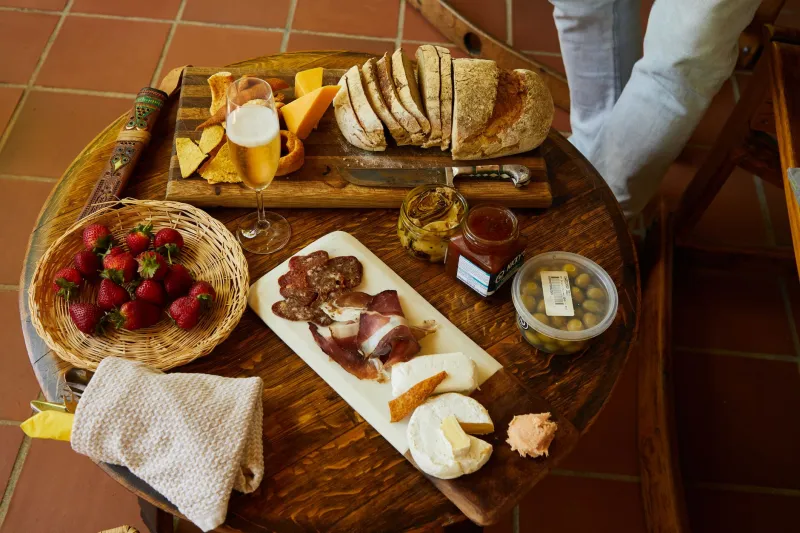
A typical French Sunday evening spread might include a selection of charcuterie – perhaps some jambon de Bayonne or saucisson sec – alongside a wedge of good cheese that's been sitting on the counter since lunch, slowly reaching that perfect room temperature. There'll be cornichons for sharpness, a few radishes with butter and salt, some ripe tomatoes with nothing more than a drizzle of olive oil.
The bread – always proper bread, never the squishy stuff – gets sliced at the table with the kind of ceremony that would seem absurd if it weren't so genuinely satisfying. There might be a pot of rillettes, or perhaps some leftover pâté from earlier in the week. A simple green salad, dressed with the kind of vinaigrette that takes thirty seconds to make but somehow tastes like it took hours.
What strikes you immediately about this approach is how it manages to feel both effortless and entirely civilised. Nobody's slaving over a hot stove, yet everyone's eating well. The food is simple, but it's been chosen with care. The presentation is minimal, but it's been done with respect.
The British Sunday Night Tragedy
Contrast this with our own Sunday evening habits, and the difference is stark. We've somehow convinced ourselves that a proper meal must involve heat, effort, and ideally some form of technological intervention. If it hasn't been microwaved, fried, or delivered in a foil container, it doesn't count as dinner.
This obsession with hot food has led us to a peculiar place where we'd rather eat mediocre takeaway than excellent bread and cheese. We'll queue for twenty minutes for a disappointing curry rather than spend five minutes assembling something genuinely delicious from what's already in our kitchen.
The irony is that many of us already have the ingredients for a perfect French-style Sunday supper. That wedge of decent cheddar, the jar of pickled onions, the sourdough we bought for breakfast – these humble ingredients, treated with a bit of French-style respect, could transform our Sunday evenings entirely.
The Ritual of Winding Down
Perhaps the most important element of the French Sunday supper isn't the food at all, but the pace. This isn't about grabbing a quick bite before the week begins again. It's about creating a gentle buffer zone between the indulgence of the weekend and the reality of Monday morning.
The table gets set properly – not because anyone's coming to dinner, but because the act of eating deserves that small ceremony. Phones are put away. The television stays off. Instead, there's conversation, perhaps a glass of wine, and the kind of unhurried atmosphere that reminds you why the French are so much better at this whole living business.
Making It Work in Britain
Adapting this approach for British kitchens doesn't require a complete cultural overhaul. Start small: next Sunday evening, resist the urge to order in or heat up leftovers. Instead, raid your fridge and cupboards with French eyes.
That block of mature cheddar? Bring it to room temperature and slice it properly. The crusty bread? Cut thick slices and serve with good butter. Add some pickles, perhaps a few slices of decent ham, maybe an apple or two. Set the table as if you're expecting guests, even if it's just the family.
The transformation is remarkable. What begins as a collection of odds and ends becomes something approaching a feast. More importantly, what starts as a hurried refuelling stop becomes a proper conclusion to the weekend – a moment of calm before the storm of Monday morning.
The Art of Enough
The French Sunday supper teaches us something profound about the relationship between effort and satisfaction. Not every meal needs to be a production. Sometimes, the most memorable dining experiences come not from complex cooking, but from simple ingredients treated with respect and consumed without hurry.
In our rush to make every meal an event, we've forgotten that sometimes the most nourishing thing we can do is simply sit down together with good food and take our time. The French, as usual, have been quietly getting this right all along.