The Table Is Yours for the Evening: How French Cafés Turned Slowness into a Business Model
Ask a British restaurant manager about table turns and watch their expression change. The concept — how many times a table can be occupied by different groups in a single service — is one of the central metrics of UK restaurant economics. Two turns at dinner is standard. Three is aspirational. The maths are simple: more turns mean more covers, more covers mean more revenue, more revenue means survival in a market where margins hover somewhere between thin and invisible.
Now ask the same question in a French bistro. The concept doesn't translate quite the same way. Not because French restaurateurs don't understand economics — they understand them perfectly well — but because the model is built around a different assumption about what a customer is actually buying.
What the French Assume About You
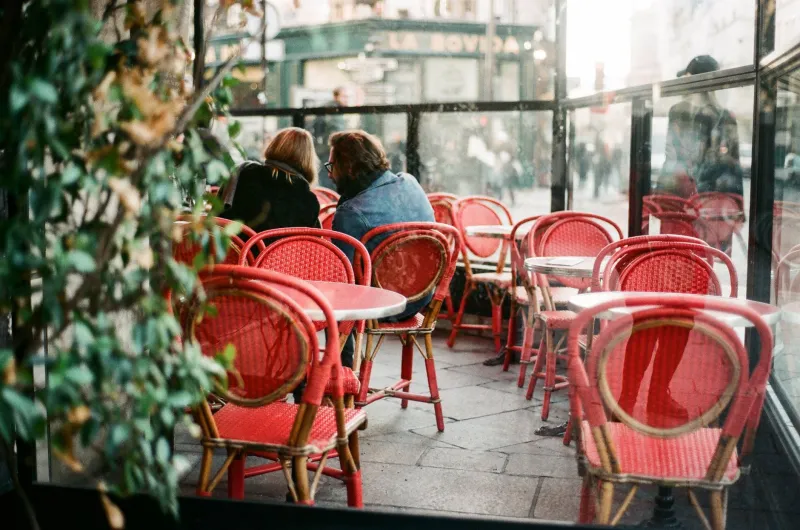
When you sit down in a French café or bistro, the implicit contract is this: the table is yours. Not for ninety minutes. Not until the dessert menus have been cleared with pointed efficiency. For the duration of your meal, however long that takes. You won't be asked if you're still enjoying things at fifteen-minute intervals. The bill won't materialise on the table before you've requested it. No one will begin hovering.
This isn't accidental. It reflects a foundational assumption about what dining is: a complete experience with its own natural rhythm, not a transaction to be processed as quickly as possible. The apéritif has its moment. The entrée has its moment. There's a pause between courses that is not a failure of kitchen efficiency but a deliberate breath in the meal's structure. The French word attendre means both to wait and to expect. That ambiguity is not coincidental.
For British diners accustomed to the gentle but unmistakable pressure of UK restaurant service — the pre-emptive bill, the menu whisked away before you've decided, the pointed enquiry about whether you'd like anything else — a French meal can feel disorienting at first. Then, usually around the second glass of wine, it feels like exactly what eating out should be.
The Economics, Honestly
The obvious objection is financial. If you're turning a table once instead of twice, you're halving your dinner revenue from that seat. For a small restaurant operating on thin margins in, say, central Manchester or Edinburgh, that sounds catastrophic.
But the maths are more interesting than they first appear. French bistro economics compensate through several mechanisms that British restaurants tend to underuse.
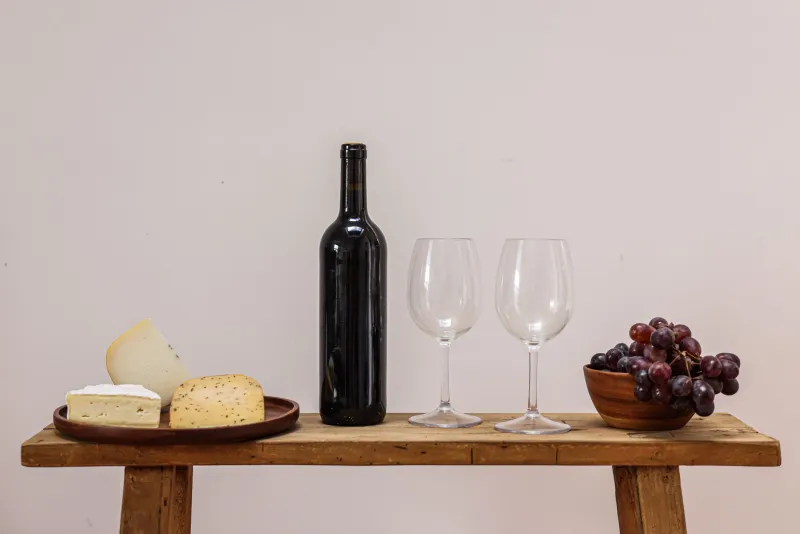
The first is the drinks trajectory. A meal that lasts two and a half hours rather than ninety minutes naturally accommodates an apéritif, wine with food, and a digestif or coffee at the end. Each of those stages carries healthy margins. A diner who arrives, eats quickly, and leaves has bought a main course. A diner who settles in has bought an experience — and experiences include bottles, not just glasses.
The second is the prix-fixe structure. Many French bistros offer set menus at lunch and dinner that guarantee a minimum spend per head while simplifying kitchen operations. The customer knows what they're getting and what it costs. The kitchen knows what it's producing. Waste drops. Efficiency — in the kitchen, if not on the floor — actually increases.
The third is loyalty. Diners who feel genuinely welcomed, unhurried, and well-fed come back. Repeatedly. British restaurant culture, with its churn of openings, closings, and Instagrammable concepts, sometimes seems to have forgotten that a regular customer is worth more than any marketing campaign.
Voices from the UK
Some British café and bistro owners are attempting exactly this shift. A small French-influenced café in Bristol — the kind of place with zinc countertops and a handwritten menu on a chalkboard — made the decision two years ago to stop accepting bookings for under ninety minutes at dinner. The owner describes the initial anxiety: "We were convinced we'd lose covers and go under by Christmas. What actually happened was our average spend per head went up by about twenty percent. People ordered cheese. They ordered digestifs. They stayed and spent."
A similar experiment at a bistro in Edinburgh found that extending the expected meal duration also reduced stress for front-of-house staff. Fewer tables in motion at any one moment meant fewer mistakes, fewer complaints, and lower staff turnover — itself a significant cost in the industry.
None of this is to suggest that the French model transplants without friction. London rents are not Lyonnaise rents. The cost pressures on a British city-centre restaurant are genuinely brutal, and anyone who dismisses them with a shrug and a reference to French joie de vivre hasn't tried to negotiate a commercial lease on the Tottenham Court Road. The structural differences are real.
The Rhythm Requires Commitment
What the French model demands, above all, is consistency of philosophy. You cannot run a slow-service bistro while also running a social media account that promises speedy lunches. You cannot train your staff to be unhurried and then panic-seat a waiting list at eight-fifteen. The rhythm has to be embedded in every decision, from the length of the menu to the spacing of the tables to the way reservations are taken.
It also requires a certain confidence — in the food, in the experience, in the customer's willingness to be looked after rather than processed. That confidence is not arrogance. It's the belief that if you make something genuinely worth sitting down for, people will sit down for it.
Slowing Down Is Not the Same as Standing Still
The French café is not slow because it's lazy. It's slow because it respects the meal enough to give it time. The waiter who doesn't rush you isn't indifferent — they're trusting you to know when you're ready. The kitchen that sends courses at intervals isn't inefficient — it's giving you a chance to actually taste what you've ordered.
British restaurants have extraordinary talent, extraordinary ingredients, and increasingly sophisticated customers. What many of them still lack is the courage to stop treating the table as a unit of throughput and start treating it as a place where something worth lingering over might happen.
At Le Café Anglais, that courage is the whole point. The table is yours. Take your time.