The Mid-Meal Pause That Could Change the Way Britain Entertains
The Problem with the British Dinner Party Trajectory
Anyone who's hosted a dinner party in Britain will recognise the moment. It arrives somewhere around the time the main course dishes are being cleared. The table is warm, the wine has been flowing for two hours, and there's a collective slump — a gentle deflation that settles over the room like a comfortable fog. Conversation drifts. Someone tops up their glass mostly out of habit. The host disappears to the kitchen to wrestle with the cheese board and comes back to find half the guests looking pleasantly glazed.
This is the moment the French solved centuries ago. They called the solution the trou normand, and it's one of the most elegantly practical ideas in European dining culture. Somehow, it's barely crossed the Channel.
What Is the Trou Normand?
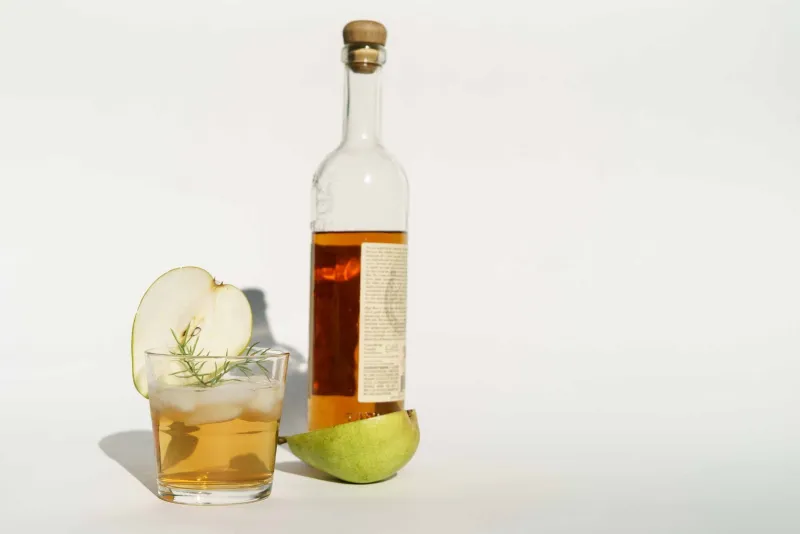
Literally translated, trou normand means 'Norman hole' — and the name is more descriptive than it sounds. The idea is simple: at a certain point during a long, ambitious meal, a small intermission is introduced. Traditionally, this takes the form of a shot glass of Calvados, the apple brandy of Normandy, served ice-cold. In more modern interpretations, it's often a small scoop of apple or pear sorbet, sometimes doused with a measure of Calvados poured over the top.
The purpose is twofold. First, the sharp cold or the bracing spirit cuts through the richness that has accumulated over the previous courses, resetting the palate and, crucially, the appetite. Second — and this is the part that's easy to underestimate — it provides a natural pause in the meal's rhythm. A breath. A moment of collective recalibration before the table moves on to whatever comes next.
In Normandy, where the tradition originates, it was historically served before the roast at a large feast — essentially creating space for a second act of serious eating. In contemporary French dining, it tends to appear between the main course and the cheese or dessert, serving as a gentle punctuation mark rather than a structural necessity.
The Norman Origins
Normandy has always had a complicated, magnificent relationship with food and drink. It's the land of cream, butter, camembert, and apples — a landscape that produces ingredients of such richness that the cuisine practically demands some mechanism for managing excess. Calvados, distilled from the region's famous cider apples, has been produced here since at least the sixteenth century, and it found its way into the meal as a practical solution to a pleasurable problem: how do you eat more when you've already eaten quite a lot?
The trou normand was that solution. It worked, it became ritual, and it spread — though never very far beyond France's borders, which remains one of the minor mysteries of culinary history.
Why British Dinner Parties Need This
British home entertaining has many virtues, but pacing is not always among them. We tend to front-load our effort — elaborate canapés, generous starters, an ambitious main — and then find that by the time cheese arrives, the meal has lost its momentum. The trou normand addresses this directly by building a reset point into the structure of the evening.
It also does something subtler: it signals ambition. Producing a small sorbet between courses tells your guests that this is a meal that has been thought about, that there's a shape to the evening, that the host is in control of the experience rather than simply ferrying dishes from the kitchen. It elevates the occasion without requiring anything particularly difficult from a culinary standpoint.
And practically speaking, it buys time. While the trou normand is being enjoyed, the host can compose the cheese board, plate the dessert, or simply pour another glass of wine and sit back down at the table. It's an intermission that benefits everyone.
How to Do It at Home
The good news is that this requires almost no specialist skill or equipment. Here are three approaches, ranging from traditional to simple:
The Classic Version: Serve a small scoop of tart apple sorbet (shop-bought is completely fine) in a small glass or espresso cup, with a teaspoon of Calvados poured over it. The spirit melts into the sorbet and the combination is sharp, cold, and bracing in the best possible way. Calvados is available at most large supermarkets and good off-licences.
The Spirit-Only Version: A small, well-chilled shot of Calvados on its own is perfectly traditional and requires no preparation whatsoever. Serve it in a small glass, not a large one — the point is a single bracing measure, not another drink.
The Contemporary Version: A small scoop of lemon or elderflower sorbet with a few drops of good apple cider vinegar stirred through it gives a similar palate-cleansing effect without any alcohol, which is useful if some of your guests aren't drinking. It sounds slightly odd; it tastes surprisingly wonderful.
A Word on Timing
The trou normand works best served after the main course plates have been cleared but before cheese or pudding arrives. Announce it briefly — 'a small French tradition before we move on' — or say nothing at all and let people work it out. Either approach has its charm. The important thing is that the table pauses together, takes a collective breath, and then turns back to the evening with something resembling a fresh appetite.
It takes about three minutes. It costs almost nothing. And it will make your next dinner party feel like a meal rather than simply a sequence of dishes.
Somewhere in Normandy, someone is nodding in quiet satisfaction.